The $2 Million Voyage That Proves True Wealth Is Measured in Rivets, Not Ritz-Carlton Suites
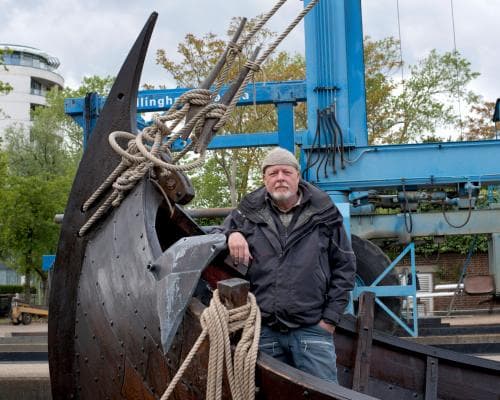
The last time you crossed the Black Sea, you probably did it on a deck with a Negroni in hand and a personal butler refolding your napkin. That is not how Lars and his crew did it. They crossed at 2 a.m. in a 65-foot wooden replica of a 1,000-year-old trading vessel, with no keel, no cabin worth mentioning, and a bilge that smells like the bottom of a fish market. The waves could have sunk them. The lightning, they discovered, hits the sea instead of the mast — a small mercy for a boat built with axes and handmade rivets. This is not a vacation. This is the kind of wealth that has nothing to do with your net worth and everything to do with your nerve.
Here is the story: In 2014, a Norwegian foundation called the Oseberg Viking Heritage Foundation — chaired since 2023 by a retired IT executive named Lars — began building a replica of the Klåstad ship, a Viking cargo vessel excavated from a farmer's field in 1970. Archaeologists dated the original to AD 998. The replica, named Saga Farmann, is 20 meters long and took nearly a decade to build. The foundation used no power tools. They chopped timber from the forest with axes. Their blacksmith forged thousands of iron rivets, one by one. The result is a boat that looks like it just sailed out of a saga — because it essentially did. In April 2023, a rotating crew of about 12 volunteers set off from Tønsberg, Norway, to retrace a Viking trading route all the way to Istanbul — which the Norse called Miklagard, or "the great city." The voyage took 16 weeks. Lars joined for half of it.
Let’s talk about the craftsmanship, because that is where the real price tag lives. You cannot insure a voyage like this. You cannot buy a ticket. The ship itself has no monetary value in the conventional sense — no one is appraising it for a Christie’s catalog — but the labor alone, if you paid modern artisans to replicate Viking-era blacksmithing and shipwright techniques at scale, would easily run into the millions. The rivets alone required thousands of hours of hand-forging. The planks were split from logs using wedges, not saws. There is no fiberglass, no epoxy, no GPS that matters when the wind decides your course. The boat has no keel — the deep fin that keeps modern sailboats from sliding sideways — so every point of sail demands constant, muscle-burning attention from the crew. The ropes are thick, heavy, and unforgiving. Lars learned to sail Viking ships years before the voyage, but most of the crew had never even seen the ship before they boarded. They slept on the open deck, often under a tent to keep dry, waking to ice in the spring cold. The cabin? It fills with seawater bilge and rots, so nobody uses it for long. This is not luxury in the way you usually read about in this magazine. It is a different kind of luxury: the luxury of doing something that cannot be bought at any price.
What does this voyage signal about wealth and taste in 2024? It signals that the ultra-high-net-worth appetite has shifted from the merely rare to the genuinely unrepeatable. A Birkin is rare. A Patek Philippe Grandmaster Chime is rare. But a hand-forged Viking longboat that sails the exact route its ancestors sailed a millennium ago, crewed by strangers who become family over 16 weeks of freezing nights and lightning storms — that is not rare. It is singular. It cannot be replicated. You cannot commission a second one because the shipwrights who built Saga Farmann are not taking orders. They are volunteers. The foundation’s mission is cultural preservation, not commerce. For the ultra-wealthy who have everything, the new frontier is not another island or a hypercar — it is the kind of experience that leaves you exhausted, terrified, and utterly alive. The kind that makes your friends at the yacht club stare in silence when you describe waking up to ice on the deck of a boat that has no bathroom, no engine, and no backup plan.
So what comes next? The Saga Farmann voyage ended with a full moon over the Bosphorus Strait and a crew that had weathered the Black Sea, the Danube, and the Rhine. Lars is still chair of the foundation, and the ship is now a floating ambassador for a kind of craftsmanship that most of the world has forgotten. There is talk of future expeditions — perhaps to the British Isles, perhaps to Greenland, following the sagas of Erik the Red. For now, the ship is docked, the rivets are cooling, and the volunteers have gone back to their ordinary lives. But the story is already spreading among a certain kind of collector: the one who would trade a garage full of Ferraris for a single voyage on a boat that has no price tag, no amenities, and no equal. That is the new marker of status. Not what you own. What you dared to do.
If you want to feel this kind of wind in your hair, you cannot buy a ticket. But you can volunteer. The Oseberg Viking Heritage Foundation welcomes skilled hands — or willing learners — for future voyages. No experience required. Just a tolerance for cold, a respect for rivets, and the willingness to wake up on a deck that has not changed in a thousand years.
The Experience
Contact the Oseberg Viking Heritage Foundation to inquire about volunteer crew positions on future expeditions. No yachting experience required — only a willingness to sleep on deck and learn the ropes the Viking way.