The Arctic's Vital Signs Are Going Dark — and That's a Global Security Problem
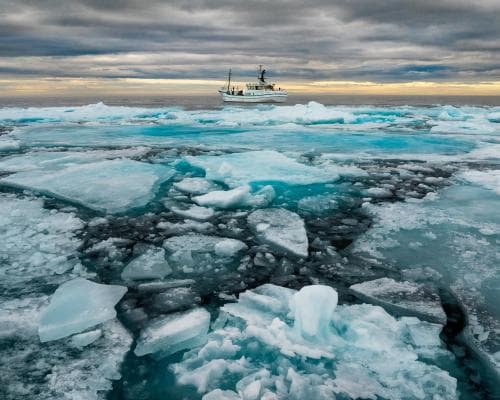
In the high-stakes game of planetary monitoring, the Arctic has always been the canary in the coal mine. Now, the canary is being told to stop singing. The Trump administration's quiet decision to pull NOAA's support for the Arctic Report Card — the peer-reviewed annual assessment that has tracked the region's accelerating transformation since 2006 — is not a bureaucratic footnote. It's a strategic blindfold at the exact moment we need the clearest vision.
For nearly two decades, the Arctic Report Card has been the definitive scorecard of a region in crisis. It has documented with chilling precision the four-fold acceleration of warming, the record-low winter sea ice extent in March 2025, and the unsettling reversal of the Arctic's role as a carbon sink. This isn't academic trivia; it's the operational data that underpins global weather prediction, shipping routes, and the stability of the entire Northern Hemisphere's climate system. The administration's explanation — that NOAA will continue collecting data and other programs will support research — rings hollow. The report's unique value lies in its synthesis, its peer-reviewed clarity, and its public accessibility. Killing the coordination is a death by a thousand cuts.
This move is a gift to those who prefer to negotiate reality rather than face it. The Arctic is not just a frozen wasteland; it's a geopolitical chessboard where the US, Russia, and China are vying for control of new shipping lanes and vast mineral wealth. As the ice retreats, the region becomes more accessible, and the need for reliable environmental intelligence becomes more acute. The Arctic Report Card was a key piece of that intelligence. Its absence creates a vacuum, where guesswork and competing national narratives fill the void. When you're flying blind in the world's most volatile climate zone, that's not just a scientific loss — it's a security risk.
The decision also signals a deeper ideological shift. It's part of a broader pattern of diminishing federal support for climate science, a retreat from the very tools that could help us adapt to the changes we've already set in motion. The irony is that the Arctic is where the impacts of climate change are most visible and most tangible. The data is not abstract; it's melting under our feet. The 2025 report showed surface temperatures from October 2024 through September 2025 were the warmest since 1900. That's not a future prediction; it's a present-tense reality. Silencing the messenger doesn't change the message; it just makes it harder to hear the alarm.
But here's the thing: the science doesn't stop because the federal government withdraws. The Arctic Report Card is a collaborative effort, involving hundreds of scientists from institutions around the world. NOAA's withdrawal may hamper coordination, but it cannot erase the underlying observations. The data will still be collected, the satellites will still pass overhead, and the researchers will still publish. What's lost is the authoritative, unified voice that translated raw data into actionable insight for policymakers and the public. That loss is profound, especially as the Arctic's changes cascade into extreme weather events across the US and Europe — from winter storms to summer heatwaves. The report was a warning system, and we're dismantling it.
The future of Arctic science now rests on a fragile global coalition. The question is whether other nations, philanthropic funders, and even billionaires with an eye on the long game will step into the void. There's a precedent: when governments retreat, private capital often rushes in, and not always for altruistic reasons. But this isn't about saving a report; it's about maintaining a shared understanding of our planet's most fragile frontier. The Arctic is not just a regional issue; it's a global early-warning system. And when that system fails, we all lose the ability to see what's coming. The administration's decision is a deliberate act of self-harm, a choice to ignore the very signals that could inform our adaptation. The ice doesn't care about politics, and neither does the climate. It will keep changing, whether we're watching or not. The only question is whether we'll be prepared for what that change brings.