The Mastery of Ascent: Pogacar’s Col du Tourmalet Conquest and the Art of Controlled Dominance
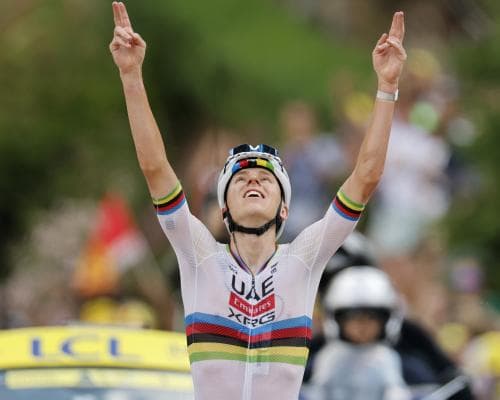
The heat was suffocating, the asphalt shimmering like a mirage, and the gradient of the Col du Tourmalet—a legendary 17-kilometer climb with pitches that touch 10 percent—was enough to crack even the most seasoned riders. But Tadej Pogacar, the Slovenian phenom who has become the undisputed emperor of the Grand Tours, did not crack. He soared. With 8 minutes and 18 seconds of daylight between him and the next contender, Tom Pidcock, his victory on stage six of the 2026 Tour de France was less a race than a coronation. For those of us who follow the sport—and for the ultra-wealthy who collect moments of human transcendence like rare wines—this was a performance that demanded a new vocabulary.
Pogacar’s return to the yellow jersey was never in doubt, as the Guardian’s live blog noted, but the manner of it was what captivated. He didn’t just win; he erased the competition. The Tourmalet is a beast that has humbled champions for decades, its switchbacks a brutal test of power-to-weight ratio, lactic acid threshold, and sheer will. Pogacar, aboard his Colnago V4RS—a bike that, in its top-spec build, costs north of $15,000 and is as much a sculpture as a machine—made it look like a Sunday spin. His cadence was metronomic, his body low and still, a study in aerodynamic efficiency. It was the kind of performance that makes you want to call your dealer and order something with a V12 engine, just to feel a fraction of that controlled fury.
What sets Pogacar apart—and what makes this victory a talking point in the hushed salons of Monaco and Gstaad—is the sheer improbability of his dominance. The Tour de France is designed to be a lottery of attrition: crashes, mechanical failures, misjudged nutrition, and the cruel hand of the Alps in the final week. Yet here he was, on stage six, already wearing the yellow jersey and the polka-dot king of the mountains jersey in spirit, if not in cloth. One reader, Roland Marshall, proposed a charmingly absurd solution: force Pogacar to wear both jerseys simultaneously, plus the white jersey for best young rider, to give the peloton a fighting chance. It’s the kind of joke that reveals a deeper truth—that we are witnessing a level of performance that borders on the supernatural, a rarity that collectors of human achievement will speak of for decades.
For the market of elite cycling—and the luxury brands that orbit it—Pogacar’s ascent is a case study in value creation. His UAE Team Emirates squad operates with the precision of a Swiss watchmaker, deploying tactics that feel less like sport and more like a military campaign. The cost of fielding such a team is astronomical: rider salaries in the millions, custom carbon-fiber frames, support vehicles that are themselves rolling works of engineering art. But the return is incalculable. Pogacar’s yellow jersey is a mobile billboard for sponsors like Emirates, Colnago, and Pirelli, and his victories drive demand for everything from high-end bicycles to the luxury watches and sports cars that his fans covet. When Pogacar wins, the entire ecosystem of aspirational consumption gets a jolt.
Yet the real story here is not the hardware—it’s the software. Pogacar’s mind is the rarest component. After the stage, Tom Pidcock, a man who finished 15th and lost over eight minutes, spoke with a smile: “In those situations, you just want to bury yourself in a hole and hide away.” That is the confession of a mortal. Pogacar, by contrast, seems to ascend into a state of flow where pain is just data. This is the same quality that defines the world’s greatest collectors: the ability to see beyond the immediate, to recognize that true luxury is not the object itself but the mastery required to possess it. A Bugatti Chiron is impressive; driving it to its limit on a mountain pass is something else entirely.
As the Tour moves on to the sprinter’s paradise of Bordeaux, and then into the diabolical Alps, the question lingers: can anything stop him? Mechanical problems, a crash, a misjudged descent—these are the only variables left. For the rest of us, watching from our screens or, if we’re lucky, from a VIP perch on the Col de la Loze, Pogacar’s Tourmalet victory is a reminder that dominance, when executed with grace, is the ultimate luxury. It is not about the price tag; it is about the privilege of witnessing something that will never be repeated. And that, dear reader, is worth far more than any hypercar.