The Fall of the Floating Kingdom: How a Fugitive Tycoon’s Yacht Became a Symbol of Hubris
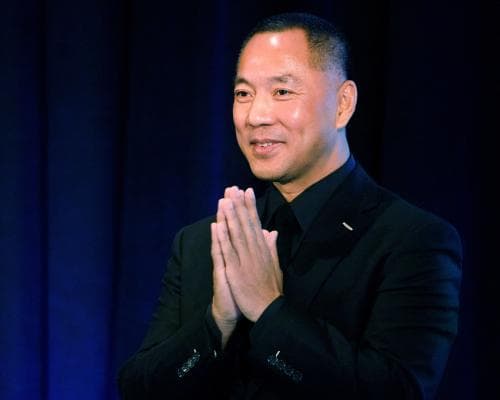
There is a particular silence that settles over a seized superyacht when its owner’s reign ends. The teak decks no longer hum with the footfalls of guests sipping vintage Champagne; the crew quarters empty; the satellite dishes go dark. For the vessel once belonging to Miles Guo—the Chinese property developer turned political dissident turned convicted fraudster—that silence is now deafening. Moored in the shadow of a federal investigation, the yacht is more than a forfeited asset; it is the physical embodiment of a narrative arc that began with a Manhattan penthouse overlooking Central Park and ends with a thirty-year sentence in a US prison.
Guo, who styled himself as a champion of democracy after fleeing China in 2017, understood the language of luxury as a tool of persuasion. His superyacht was not merely a vessel for leisure but a stage for his carefully curated persona. It was aboard this very yacht in August 2020 that Steve Bannon was arrested, accused of embezzling funds from a border-wall fundraising scheme—a moment that splashed the yacht’s name across headlines worldwide. For the ultra-wealthy collector, a yacht is often a sanctuary of privacy and pleasure; for Guo, it became a prop in a high-stakes drama of political theater and financial predation.
Crafted with the sort of opulence that defines the upper echelons of the yachting world, Guo’s vessel was a floating statement of arrival. Its interiors, likely appointed with Italian marble, custom millwork, and art curated to impress, were designed to host the kind of guests who could influence geopolitics or write seven-figure checks. The yacht’s range and amenities—helicopter pad, infinity pool, owner’s suite with panoramic views—placed it among a fleet of vessels owned by oligarchs and hedge fund titans. Yet its true rarity was not in its specifications but in its backstory: a boat that served as a roving headquarters for a man who claimed to be building a democratic movement while allegedly defrauding thousands of investors out of more than $1 billion.
The market for such yachts has always been opaque, governed by shell companies and trust structures that shield ownership from public scrutiny. Guo’s vessel, now a piece of evidence in a sprawling forfeiture case, highlights the darker currents running beneath the surface of the luxury marine industry. For collectors, the due diligence surrounding a pre-owned yacht of this provenance becomes a minefield. Who owned it? How was it financed? Are there liens, investigations, or criminal associations? The secondary market for superyachts already demands discretion; a vessel tied to a high-profile fraud conviction carries a stigma that even the most meticulous refit cannot erase.
What does a yacht like this signal about luxury taste in the current climate? For the discerning buyer, the answer is shifting. The era of ostentatious display as a proxy for power is giving way to a quieter, more intentional form of ownership—vessels that prioritize sustainability, heritage, and purpose over sheer scale. Guo’s yacht, with its baggage of scandal and legal entanglements, stands as a relic of a gilded age where a dissident’s megayacht could double as a prop for a Ponzi scheme. The truly refined collector now seeks provenance that whispers, not shouts, and a hull that carries stories of craftsmanship, not courtroom drama.
As the yacht awaits its fate—likely auction by federal authorities or repurposing by a new owner willing to weather the PR storm—it offers a final lesson. In the world of ultra-luxury, the most valuable asset is not the price tag but the narrative. And sometimes, the most aspirational move is knowing when to let a floating kingdom sink out of sight.

