Kansas City’s World Cup Conquest: How the Heartland Became a Global Playground
There is a particular brand of wealth that no longer seeks merely to own the view, but to curate the experience itself. For the past month, the most coveted address in the world has not been a penthouse in Monaco or a private island in the Maldives, but a stretch of pavement in Kansas City, Missouri — a city that, until recently, was better known for its jazz and its burnt ends than for hosting the planet’s most watched sporting event. Yet here, amid the scent of smoked meat and the roar of 11 languages colliding in a single block, the 2026 FIFA World Cup has revealed something the ultra-wealthy have long known: the rarest luxury is not a thing, but a moment. And Kansas City, the smallest of the 16 host cities, has engineered one of the most exquisite moments in tournament history.
The city’s rise to global prominence is not an accident of geography but a deliberate act of curation. Armed with a proud soccer heritage — the city’s Sporting KC has long been a quiet powerhouse in American football — local organisers and civic leaders approached the World Cup with the precision of a Rolls-Royce commission. They understood that the modern luxury traveler does not come for the stadium alone; they come for the texture. The hiccups were real — shuttle buses that ran late, traffic that snarled around the first home match — but they were addressed with the responsiveness of a five-star hotel concierge. By the second match, the kinks were ironed out. The result was an environment so seamless that visitors from Algeria, the Netherlands, England, and Argentina found themselves not just watching football, but adopting Kansas City as a second home. The city’s famed barbecue pits became diplomatic tables; the watch parties, impromptu salons of global culture.
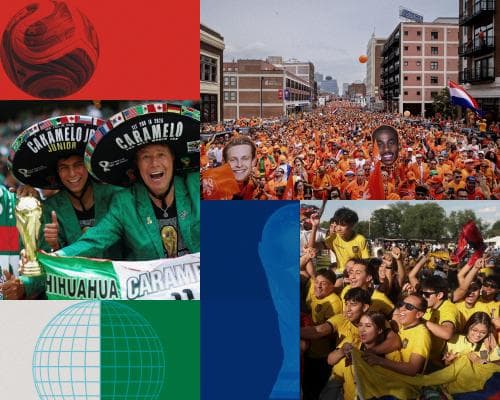
The craftsmanship of this transformation is worth examining. Where other host cities have relied on monumental architecture and corporate sponsorships, Kansas City invested in the intangible: hospitality as an art form. The official fan fest teems with bodies from every continent, a living tapestry of jerseys from nations that have never met in peace on a pitch. The people of Lawrence, a college town an hour west, adopted the Algerian team as their own, offering home-cooked meals and local guides. In Parkville, a Dutch bar became a sea of orange, with locals learning the lyrics to ‘Hup Holland Hup’. The England and Argentina squads, rivals on the field, were photographed together at Joe’s Kansas City Bar-B-Que, sharing a platter of ribs that would make a Côte d’Azur sommelier weep with envy. This is not happenstance; it is the result of a city that understands that the ultimate luxury is belonging — even for a fortnight.
For the collector of experiences, the World Cup is the ultimate trophy. But it is not the matches themselves that hold value; it is the ephemeral, un-repeatable moments that occur between them. The ultra-wealthy who attended matches in Kansas City — flying in on Gulfstreams, checking into suites at the newly renovated Ambassador Hotel — reported that the real magic was not on the pitch, but in the streets. One hedge fund manager from Greenwich, Connecticut, confided that he had skipped the second half of a group-stage match to wander the Power & Light District, where he watched a group of South Korean fans teach a Brazilian samba troupe their traditional drum patterns. ‘I’ve been to five World Cups,’ he said, ‘and I’ve never seen anything like this. The city itself is the main event.’ This is the new paradigm of luxury travel: the destination as a living, breathing artwork, curated by locals who know that the best souvenir is a story.
What does this signal about the state of luxury taste? It suggests that the era of ostentatious displays — the superyacht, the private jet, the numbered bottle of Romanée-Conti — is giving way to something more subtle: the ability to be present in a moment that cannot be replicated. Kansas City’s World Cup is not a product you can buy; it is a memory you must earn. The city’s embrace of the tournament, and the tournament’s embrace of the city, is a reminder that the most exclusive club in the world is not defined by net worth, but by the willingness to share a table with a stranger from a distant land. As one local organiser, Eric Wahl, put it: ‘We made new friends around the globe.’ In an age of hyper-curated isolation, that is the rarest luxury of all.
As the final whistle blows and the last fans board their private charters, Kansas City will return to its quiet rhythms. But the city has been irrevocably changed. The infrastructure improvements — the completed metro projects, the expanded airport, the polished public spaces — will remain as a legacy. Yet the true inheritance is intangible: a blueprint for how a place can transform itself into a global destination without losing its soul. For the ultra-wealthy who experienced it, the lesson is clear. The next great luxury investment is not a property or a painting; it is a city that knows how to throw a party. And Kansas City, in this moment, has set a standard that even St. Moritz and St. Barts will struggle to match.


