The Quiet Rebellion of the Well-Dressed Man: Why a Jumpsuit on TV Became a Status Signal
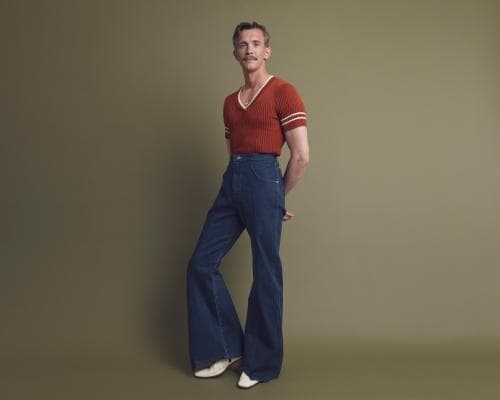
Here’s a truth the luxury world rarely acknowledges: the most expensive thing a man can wear is not a bespoke suit or a limited-edition tourbillon. It’s the courage to look like himself. That’s the quiet revolution Stephen Libby sparked when he appeared on a hit reality show wearing a chunky mint green jumper and high-waisted jeans—a look so ordinary it bordered on radical. In a sea of safe navy blazers and predictable white sneakers, Libby’s outfit stopped conversations. Not because it was loud, but because it was honest. And in a culture where men’s fashion has been flattened into a uniform of beige and boredom, honesty is the ultimate flex.
Libby’s story is not about a stylist’s budget or a designer’s favor. It’s about a boy from the Isle of Lewis, a three-hour ferry ride from the nearest Topman, who learned early that clothes are armor. He was turning up his hems at primary school while other boys were pulling down their caps. His biannual shopping pilgrimages to Inverness felt like religious rituals—and the first cardigan he bought got him mocked so mercilessly that he hid his skinny jeans in a bag for years, changing after leaving the house. That’s the part that resonates with anyone who has ever paid a premium for discretion: the fear of being seen is the one thing money can’t buy. But Libby didn’t buy his way out. He aged into his own taste, trading the high street for vintage stores in Glasgow, where he discovered 70s suits with pale blue hues and shirts with dagger collars that seemed to whisper, “I know something you don’t.”
Here’s where the craftsmanship angle gets interesting. Libby’s “revelation” wasn’t a designer’s invention—it was a reclamation of heritage. Vintage pieces, he explains, are not just old clothes; they’re time machines carrying the drama of the 60s, 70s, and 80s—a celebration of print, color, and silhouette that modern menswear has flattened into a palette of oat and charcoal. He still mourns a £50 pale blue suit he passed on fifteen years ago, a reminder that the rarest luxury is often the one that got away. His current wardrobe—high-waisted trousers with a flare, billowy sleeves, vintage shirts—is a masterclass in personal rarity. You cannot buy it off a rack, and that’s precisely its value. In a world of mass-produced logos, wearing something that no one else owns is the new bespoke.
For the ultra-wealthy, Libby’s story signals a shift in how status is communicated. The old markers—brand names, seasonal drops, red-carpet labels—are becoming the equivalent of shouting in a room where everyone is shouting. The new signal is discernment: a quiet confidence that says, “I know who I am, and I don’t need a monogram to prove it.” Libby’s TV appearance, which cost him nothing in styling, became a viral moment because it tapped into a deep hunger for authenticity. Men are tired of being invisible, of wearing the same uniform as the guy next to them on the private jet. They want to be remembered. And Libby’s advice—to find what makes you feel like yourself, even if it means a three-hour ferry ride to get it—is worth more than any Milanese tailor’s phone number.
What does this mean for the future of luxury? It means the most exclusive item you can own is a point of view. It means that the next status symbol won’t be a limited-edition watch or a custom supercar—it will be the courage to wear a mint green jumper and own the room. Libby’s story is a reminder that true wealth isn’t about accumulation; it’s about curation. It’s about the pieces you choose to keep, the ones that tell your story, even if they came from a charity shop rather than a Parisian atelier. The bar for men’s fashion is so low, as he puts it, that simply dressing with intention is a revolutionary act. And for those who can afford anything, that’s the most valuable lesson of all: the ultimate luxury is the freedom to be yourself, and the confidence to let your clothes say it first.
The Experience
To cultivate your own signature look, start by exploring vintage boutiques in London or Tokyo—or book a private styling session with a personal shopper who specializes in rare, pre-owned pieces that no one else will have.