Trump’s USMCA Ultimatum: Annual Reviews Threaten $2 Trillion in North American Trade — and the Wealth Built on It
When the architect of a deal begins dismantling it, the smart money pays attention. President Donald Trump’s latest move — refusing to renew the United States-Mexico-Canada Agreement (USMCA) in its current form and replacing it with annual reviews — is more than a diplomatic shrug. It is a direct assault on the certainty that underpins the largest free-trade zone on the planet. For the billionaires, institutional investors, and family offices that have built North American supply chains on the assumption of stable cross-border rules, this is a flashing red signal. The wealth that has been quietly compounding under USMCA’s umbrella now faces a tax of unpredictability.
Trade representative Jamieson Greer’s statement on Wednesday confirmed what markets had feared: the US will not extend the pact for the next 16 years as originally envisioned. Instead, the agreement will face annual reviews, with an automatic expiration in 2036 if all three nations fail to agree on renewal. That timeline may sound distant, but in the world of capital-intensive industries — automotive manufacturing, agriculture, energy, and logistics — the shift is immediate. The deal currently governs roughly $2 trillion in goods and services annually, according to CNBC. Any business with a cross-border supply chain now faces the prospect of renegotiating terms every 12 months, a regime that favors lawyers and lobbyists over engineers and entrepreneurs.
The mechanics are brutal. Annual reviews inject maximum political volatility into long-term investment decisions. A factory built in Monterrey to serve the US market, a soybean supply chain from Saskatchewan to Texas, an automotive parts network spanning Detroit and Guadalajara — all now rest on the whims of a president who has already threatened to abandon the pact entirely. Trump’s own words from the Oval Office last month are instructive: “We don’t need anything that Canada has. We don’t need anything that Mexico has, but they need everything that we have. And they have to treat us better.” That is not the language of a dealmaker seeking mutual benefit; it is the language of a man preparing to burn the furniture for leverage.
Yet the irony is thick. Trump himself signed the USMCA into law in 2020, calling it the “fairest, most balanced, and beneficial trade agreement we have ever signed into law.” That praise now reads like a ghost from a previous administration. The shift to annual reviews effectively rewrites the deal’s core promise: that businesses could count on stable terms for a generation. For private equity firms with large stakes in North American logistics, for hedge funds long on industrial commodities, and for the billionaire families whose wealth is tied to cross-border trade, the message is clear: the era of predictable trade policy is over. The cost of hedging against this uncertainty — whether through inventory stockpiling, currency swaps, or legal retainer fees — will eat into margins that were already razor-thin.
What does this signal for the wealthy? First, it accelerates the trend toward regionalization over globalization. Capital that once flowed freely across the continent will now be scrutinized for political risk. Second, it creates winners and losers in unexpected places. Companies with diversified supply chains — those that can pivot to domestic sourcing or have operations in multiple trade blocs — will command a premium. Those overly reliant on the USMCA corridor will face compression. Third, it puts a spotlight on the next generation of trade deals. If the US cannot commit to a 16-year pact with its nearest neighbors, what does that mean for deals with Europe or Asia? The signal is a downgrade in the reliability of US trade commitments, which will ripple through sovereign credit ratings, currency markets, and cross-border M&A.
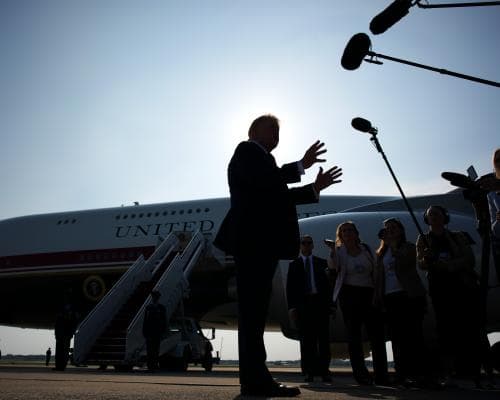
Looking forward, the smartest capital will not wait for clarity. It will price in the chaos. Expect a surge in legal and advisory fees as companies rush to model annual-review scenarios. Expect political risk insurance premiums to rise. And expect the wealthiest families to quietly reposition assets away from sectors most exposed to North American trade friction — automotive, agriculture, and energy — and toward more insulated plays like domestic infrastructure, defense, and digital services. Trump’s train ride to North Dakota may be a photo op, but the real journey is a slow-motion unraveling of the trade architecture that built the modern North American economy. For those who manage wealth, the question is not whether the USMCA survives — it is whether the capital that relied on it will find a new home before the reviews begin.