The $13 Billion Steam Revival: Inside Trump's Quixotic Quest to Rewind the Aircraft Carrier
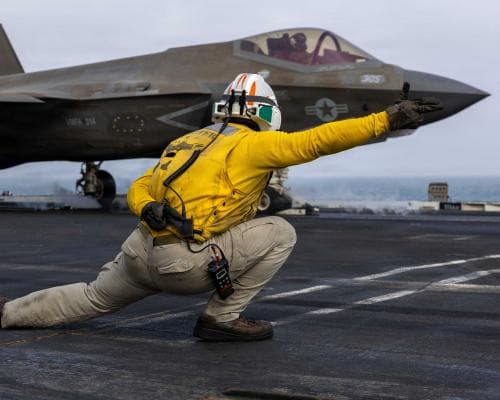
There is a moment in every great seafaring tale when the captain, peering over the bridge, decides that the future is overrated. That moment has arrived, and it is playing out not on the deck of a private superyacht but on the vast, gray acreage of a Ford-class aircraft carrier. President Donald Trump has signed a national security memorandum ordering the Pentagon to rip out the Navy's cutting-edge Electromagnetic Aircraft Launch System (EMALS) and replace it with the steam catapults that have launched jets since the Eisenhower administration. The target: the USS Doris Miller, a vessel already two years behind schedule and now facing a redesign that will make it a floating monument to a very particular, very presidential preference.
For the uninitiated, the catapult is the silent star of naval aviation. It is the mechanical arm that hurls a 45,000-pound fighter from zero to 150 knots in under three seconds, turning a runway into a slingshot. Steam catapults have done this job since the 1950s, using pressurized boilers to fire a piston down a track. EMALS, by contrast, uses a linear induction motor—think of a maglev train laid flat—to accelerate the jet with electromagnetic force. It is smoother, more powerful, and requires less maintenance. It also costs billions to develop and, in Trump's telling, sounds suspiciously like something Albert Einstein would have to decipher. “Digital,” he told Time in 2017, recounting a conversation with a Navy officer. “It sounded bad to me. Digital. What is digital?”
The president's aversion to the digital has now become official policy. The memorandum gives Defense Secretary Pete Hegseth and Acting Navy Secretary Hung Cao 60 days to produce a plan for replacing EMALS and the Advanced Weapons Elevators with steam and hydraulic systems. That means the USS Doris Miller, named after the Pearl Harbor hero, will be the last of its kind—a hybrid of 21st-century hull and mid-century propulsion. The irony is delicious: the carrier is already the most expensive warship ever built, with a price tag that routinely tops $13 billion per hull. Adding a bespoke steam system to a ship designed for electromagnetic launch is like commissioning a Bugatti and then asking the factory to install a carburetor.
For collectors and connoisseurs of extreme engineering, this is a masterclass in the tension between innovation and nostalgia. Steam catapults are not merely old—they are brutal, requiring thousands of gallons of fresh water and a crew of technicians who can wrangle 500-degree pressurized vapor. EMALS, for all its complexity, is a marvel of precision: it can launch a drone or a fighter with equal delicacy, and it puts far less stress on airframes. The Navy has spent over a decade and $4 billion perfecting it, and the system is finally working reliably on the USS Gerald Ford after a rocky start. To replace it now, mid-construction, is a logistical nightmare that naval architects are calling “the most expensive retrofit since the Titanic got its second funnel.”
But this is not a story about engineering. It is a story about taste—specifically, the taste of a man who has never been shy about overriding experts. Trump has been telling this anecdote since 2017, retelling it at rallies, in Oval Office meetings, and during Thanksgiving phone calls with troops. The story always ends the same way: “You're going to goddamned steam.” It is a rhetorical flourish that resonates with a certain kind of buyer—the one who insists on a mechanical watch over a smartwatch, a V12 over a hybrid, a hand-stitched leather interior over vegan suede. There is a romance to steam, a visible, hissing, industrial drama that electromagnetism cannot match. It is the difference between a vintage Riva and a silent electric foiler: both get you across the water, but only one makes you feel like you're commanding the sea.
The market, as always, is watching. Defense contractors are salivating at the prospect of a new steam system contract, while naval historians are sharpening their pens. The USS Doris Miller is scheduled to deliver in 2032—if the redesign doesn't push it further. In the meantime, the world's superyacht owners can take a lesson: when you have enough money, you can buy the future, but you can also buy the past. And sometimes, the past is more fun. There is something almost romantic about a steam catapult, a reminder that raw power, not ones and zeros, once ruled the waves. As one retired admiral told me, “EMALS is better, but it doesn't have a soul. Steam has a soul.”
Whether the Navy will actually comply with the directive remains to be seen. The Pentagon has 60 days to respond, and the betting in Washington is that they will come back with a cost estimate that makes even Trump blink. But the signal has been sent: in the world of the ultra-wealthy and the ultra-powerful, the right to choose the machinery of your own legend is the ultimate luxury. The USS Doris Miller may end up with steam catapults, or she may not. But she will forever be known as the ship that made a president say, “No, you're not. You're going to goddamned steam.” And that, in the end, is a story worth more than any launch system.