Oil and Gunpowder: How the Iran-Gulf Crisis Is Reshaping the Portfolio of the Persian Gulf's Richest Families
The message from Tehran this morning was unmistakable: the truce is dead. When Iran's foreign ministry declared the US-Iran Memorandum of Understanding 'ineffective' and then launched retaliatory strikes against Bahrain and Kuwait, it wasn't just a geopolitical flare-up. It was a direct shot across the bow of the region's wealthiest families—the Al Sabahs, the Al Nahyans, and the merchant dynasties whose fortunes are wired into the stability of the Persian Gulf's southern shore.
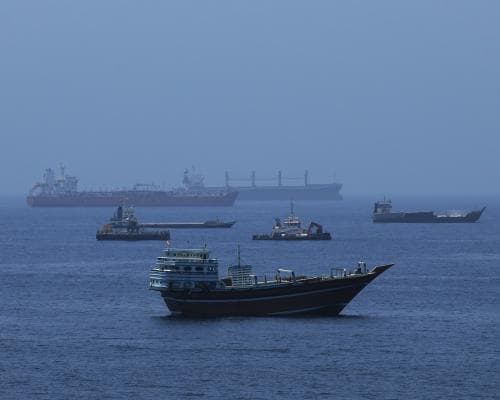
Let's be clear about what's at stake. The Strait of Hormuz is the world's most valuable maritime real estate. Roughly 20% of global oil passes through its narrow channel every day. That's roughly 17 million barrels. When Iran threatens to disrupt those arrangements—and the US revokes the license for Iranian oil sales—the price of Brent crude doesn't just twitch; it convulses. For the billionaire families who control the national oil companies of Kuwait, Bahrain, and the UAE, this is not a foreign policy abstract. It's a direct hit on their dividend streams and the sovereign wealth funds that underwrite their lifestyles.
The mechanics here are brutal. The US Treasury's decision to revoke the license for Iranian oil sales—a move Tehran says violates Article 10 of the MoU—effectively reimposes the maximum pressure campaign that sent Iranian exports crashing from 2.5 million barrels per day to near zero in 2019. But the real story for wealth builders is the secondary effect: as Iran retaliates by striking Bahrain and Kuwait, those countries' own oil infrastructure—refineries, export terminals, and shipping lanes—becomes collateral risk. The premium on Gulf oil assets just shot up, and not in a good way.
Consider the Al Sabah family of Kuwait. Their personal wealth is intertwined with the Kuwait Investment Authority, one of the world's oldest sovereign wealth funds, valued at over $800 billion. A significant chunk of that fund is tied to oil revenues and global equities. If the Strait of Hormuz becomes a contested zone—if insurance rates for tankers double, if shipping lines reroute—the KIA's liquidity profile tightens. For the family offices managing these billions, the calculus shifts from growth to capital preservation. Gold, cash, and prime London real estate suddenly look a lot more attractive than energy stocks.
Then there's the rarity angle. The Gulf's ultra-wealthy have spent decades building a reputation as safe harbors for capital—stable, low-tax, politically insulated. That narrative is now under direct fire. When Iranian missiles land in Bahrain, the message to the international investor class is clear: no place is truly immune. We've seen this before—during the 2019 Abqaiq attacks, Saudi Aramco's valuation took a $1.2 trillion hit in days. But this time, the threat is broader. It's not just Saudi Arabia; it's the entire southern Gulf.
What does this signal for markets? For the wealthy, it's a reminder that geopolitical risk is not a theoretical tail risk—it's a portfolio event. The immediate trend is stable-to-bearish for Gulf equities and energy-linked sovereign debt. But the deeper signal is about diversification. The smartest capital is already rotating: into hard assets, into jurisdictions with no exposure to Hormuz, into assets that don't depend on a fragile truce holding. The families who built their fortunes on oil are now quietly hedging against the very commodity that made them.
The forward look is uncomfortable. If the US keeps up the sanctions pressure and Iran keeps up the retaliatory strikes, we could see a repeat of the 2019 tanker wars—where insurance premiums for Gulf shipping spiked 400% in a month. For billionaires with large shipping portfolios, that's a margin squeeze. For those with dry powder, it's a buying opportunity. The smart money is watching the Strait of Hormuz not as a geopolitical headline, but as a price signal. When the water gets choppy, the best portfolios are built to sail through it—not to sink with it.