The Missouri Compromise: Inside the Match That Rewrote World Cup Fate
Before a single ball was struck in Kansas City, the fixture carried the faint, conspiratorial whiff of a biscotto—an Italian term for a match baked twice, where mutual convenience trumps competition. Critics whispered of a “Disgrace of Gijón” redux, a cynical pact to eliminate Iran. Yet what unfolded under the stadium lights was anything but scripted. For those fortunate enough to hold a ticket—or, more covetously, a key to the glass-walled owner’s boxes overlooking the pitch—this was a journey into the heart of sporting chaos, a reminder that even the most calculated itineraries can be upended by raw, unscripted emotion. The air itself seemed to sweat, thick with the humidity of the American Midwest, as 90 minutes of play twisted into a narrative worthy of a private screening.
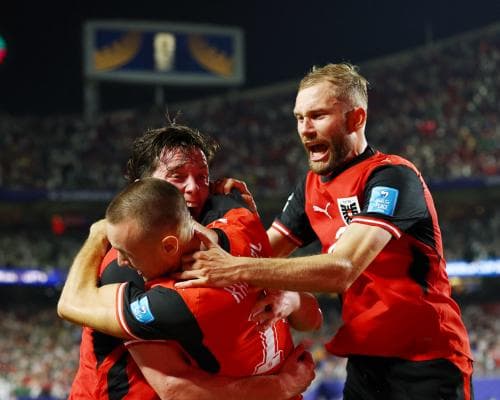
The significance of this encounter extends far beyond the final whistle. It was a collision of two distinct luxury travel philosophies: the old-world elegance of Austria, with its Alpine retreats and Viennese coffee-house culture, and the emerging opulence of Algeria, a Mediterranean gem whose coastal resorts and Saharan camps are drawing a new wave of discerning explorers. For the global elite, the World Cup has become a movable feast, a chance to anchor a private jet in a city they might otherwise overlook. Kansas City, with its jazz heritage and burgeoning culinary scene, offered a surprising backdrop—a destination reborn, much like the fortunes of the two teams. The match itself was a masterclass in access: from the moment Riyad Mahrez slotted home in the third minute of added time, sending Iranian hopes soaring, to Sasa Kalajdzic’s header that silenced them with practically the last kick, every second was a study in controlled pandemonium.
The experience of being there, however, is what separates the merely wealthy from the truly connected. Consider the logistics: a chartered Gulfstream from Vienna or Algiers, touchdown at the sleek new terminal at Kansas City International, and a helicopter transfer to a private suite where champagne flutes clinked against the roar of the crowd. The design of the stadium itself—its open concourses and state-of-the-art acoustics—amplified the tension, making every tackle and pass feel intimate. For those who prefer their luxury with a view of the water, a superyacht moored on the Missouri River offered a different kind of front-row seat, with satellite feeds and a chef preparing tagine or Wiener schnitzel between halves. The drama was not just on the pitch; it was in the calculations of the Iranian delegation, watching from their hotel in Tijuana, their joy at Mahrez’s goal evaporating as Kalajdzic rose to head home. “I couldn’t believe what happened in the last 120 seconds,” Austria’s manager Ralf Rangnick said later, his voice still raw. “Somebody would have won an incredible bet.”
The rarity of such an evening lies in its impossibility to replicate. This was not a curated gala or a private viewing of a masterpiece; it was a live, unscripted opera where the stakes were measured in national pride and tournament survival. For the ultra-wealthy, the price of admission—whether a premium seat at $5,000 or a superyacht charter at $150,000 per week—is trivial compared to the currency of memory. What they purchased was not just a ticket but a share of history, a story to tell at the next Gstaad dinner or Monaco cocktail party. The heritage of the World Cup, with its echoes of Gijón and its capacity for heartbreak, lent the night a weight that no luxury resort can manufacture. It was, in its own way, the ultimate bespoke experience: a moment that could never be booked again.
What this match signals about the future of luxury travel is a shift toward the ephemeral and the intense. The wealthy no longer seek merely to escape; they seek to be immersed in events that define eras. From the private jets circling above Arrowhead Stadium to the pop-up lounges serving vintage Krug, the World Cup has become a stage for a new kind of journey—one where the destination is secondary to the narrative. For those who witnessed this game, the memory of that steamy midwestern night will outlast any five-star hotel stay. And as the knockout rounds beckon, the next frontier for the discerning traveller is clear: not just to attend, but to be part of the story, wherever the drama flows next.


