The Salt-Sprayed Watermelon: Why August's Coolest Luxury Is Still the Sea-Chilled Melon
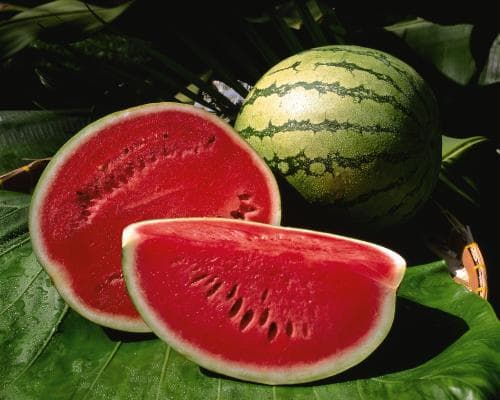
There is a moment, just before the Mediterranean sun turns vicious, when the water is still glass and the sand is still cool. That's when you drop it. Not a Birkin, not a Patek—a watermelon. It sinks for a second, then bobs, tethered to a plastic bottle by a length of string, a humble buoy marking your claim on the afternoon. By noon, when the heat is a physical weight and your skin hums with the threat of burn, you wade in, pull the string, and split that emerald orb open. The flesh is cold, almost shockingly so, and sweet in a way that no air-conditioned supermarket ever delivers. This is not a recipe. It's a ritual. And for those who know, it's the only status symbol that matters in August.
The ritual has rules, of course. The string must be tied tight, and the bottle must be empty—a bright plastic marker bobbing above the waves, a tiny flag of intent. We learned the hard way, standing waist-deep, staring into the blue, convinced that a whole watermelon cannot simply vanish. We accused currents, blamed passing boats, even entertained the fantasy that another family was, at that very moment, devouring our perfectly chilled prize. It's a particular kind of disappointment, the kind that teaches you respect for the sea and for the fruit. But that's the point. The watermelon is not a convenience; it's a commitment. It demands planning, patience, and a willingness to trust the tide. And that, in an era of instant gratification, is its quiet luxury.
August is the month of the cool fruits—cucumber, melon, watermelon—all at their peak, all light, sweet, and gloriously uncooked. They are the antithesis of autumn's heavy pumpkins and gourds, which require ovens and effort. These fruits are effortless, which is precisely their appeal to those who can afford to do nothing at all. They pair, almost magically, with salt—feta, parmesan, anchovies, prosciutto—creating a tension that mirrors the season: cool and sharp, sweet and salty. Feta and watermelon is a classic for a reason, but the adventurous can push further, adding chilli heat to a honeydew salad, or grilling watermelon until it's smoky and punchy. And for those who prefer their cool in liquid form, a cold melon soup, bright with mint, is the ultimate gesture of restraint. It says, I have nothing to prove, and everything to taste.
This is the deeper signal. The sea-chilled watermelon is not about the fruit itself—it's about the life that allows for it. The leisure to arrive early, the wisdom to prepare, the taste to know that the best things are rarely the most expensive. In a world of private jets and superyachts, the string and bottle are the true markers of insider knowledge. They say: I've been here before. I know the water. I know the heat. And I know that the only thing that will truly cool me down is something that took time, not money, to perfect. It's a form of wealth that can't be bought—only lived.
As the season peaks, the luxury market is shifting toward this kind of intangible value. The August sales might tempt with discounts on designer goods, but the real splurge is the experience. A knife displayed on a wooden magnet, sharpened to a mirror edge, is a work of art—but so is the act of slicing into a melon that has been cooling in the sea for hours. The future of luxury isn't in more; it's in the ritual, the memory, the story you tell. So this August, tie your string. Find your spot. Drop your melon. And when you pull it up, cold and perfect, know that you've bought something no boutique can sell: a moment that tastes like summer, and a secret worth keeping.
The Experience
Book a private chef's table at a Mediterranean villa this August, where the chef will teach you the art of the sea-chilled melon, paired with aged prosciutto and a chilled Vermentino.