The Cambridge Fall: Jason Arday and the New Scrutiny of Academic Hero Stories
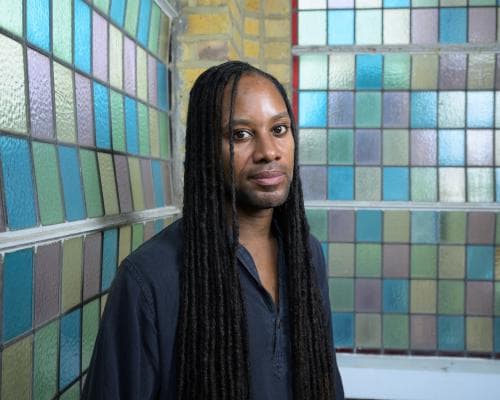
On paper, the story was irresistible. A child diagnosed as autistic, non-verbal until 11, who only learned to read and write at 18, then vaulted to become Cambridge's youngest Black professor in 800 years. For two years, Jason Arday was the human embodiment of meritocracy's promise—a walking headline for every diversity report and every TED talk about potential. And then, in the space of two weeks, it all collapsed. His resignation on Wednesday was not just a personal fall; it was a stress test for the entire machinery that manufactures academic celebrities.
Let's be precise about what happened, because the details matter more than the drama. Arday faced allegations that his PhD thesis and later research contained more than 100 passages similar to a thesis by Paula Zwozdiak-Myers, published six years earlier. He has denied plagiarism, and an earlier investigation by Liverpool John Moores University, which awarded his PhD in 2015, found no misconduct—attributing the overlaps to 'honest and reasonable error.' But that verdict did not quiet the critics. The Times subsequently published an analysis suggesting flaws in his more recent work. The pattern is now familiar: a meteoric rise, a media-friendly backstory, and then the slow drip of uncomfortable questions about authorship, qualification, and the actual substance of the scholarship.
What makes this case a watershed is not the plagiarism accusation itself—that is old news in academia—but the simultaneous unraveling of the narrative that surrounded it. Arday's claims about his past—endurance running, football exploits, charity work, academic positions, even his qualifications—have all come under scrutiny. Each new revelation, whether true or distorted, feeds a feedback loop. The same media that amplified his rise now amplifies his fall, because the story is better that way. But for the institutions involved, the stakes are existential. Cambridge, Brunel, Liverpool John Moores, and the wider UK research establishment are now facing a credibility crisis that goes far beyond one man's CV.
This is the uncomfortable truth: Arday's rise was never just about his research. It was about what he represented. For a sector desperate to show progress on race and class, he was the perfect symbol—a Black, autistic, working-class academic who broke every barrier. The problem is that symbols are fragile. When the symbol is built on a narrative that cannot withstand forensic scrutiny, the entire edifice of institutional diversity efforts takes a hit. The backlash is already forming. Critics of affirmative action and 'woke' hiring practices will use this case to argue that standards are being lowered. That is a misreading, but it is a powerful one, and it will be weaponized.
Meanwhile, the actual academic questions remain unresolved. Should a PhD be re-examined years later based on new algorithmic text-matching tools? Are the standards for 'originality' shifting in an age of AI-assisted writing and massive open-access databases? And, more fundamentally, how do we separate a person's story from their scholarship? Arday's defenders argue that his work on social justice and education has value regardless of his biography. His detractors say that if the foundation is cracked, the building is unsafe. Both can be true, but that nuance is lost in the 24-hour news cycle.
What this episode signals for the sector is a new era of verification. Universities will now be forced to treat every high-profile hire as a potential liability, conducting deeper due diligence on both academic output and personal narratives. The cost is cynicism; the benefit is integrity. But there is a deeper lesson for the innovation economy, where 'founder stories' are equally sacrosanct. The same pattern—a compelling origin narrative, rapid ascent, and then a forensic takedown—has played out in biotech, fintech, and AI. The lesson is not that we should stop celebrating improbable journeys. It is that we must build systems that reward substance over story, and that can handle the collapse of a narrative without losing faith in the underlying mission.
Arday's resignation does not end the debate. It begins a more difficult one. For every young scholar who saw themselves in his rise, there is now a warning: your story will be checked, your citations will be audited, and your past will be a public record. That is not inherently bad. But the real innovation we need is not in text-matching software or background checks—it is in creating a culture where brilliance can be verified without being destroyed, and where a fall from grace does not erase the possibility of genuine contribution. The next Jason Arday is out there. The question is whether our institutions will have the courage to let them rise, and the wisdom to let them fail without burning the whole house down.