When School Funding Becomes a Political Slush Fund: The Tech-Free Scandal Shaping Australia's Governance
In the hushed corridors of the NSW Independent Commission Against Corruption, a number keeps surfacing: $265,900. That's the sum allegedly paid by Catholic Schools NSW to two lobbying firms linked to the Christian factional group the Reformers—money that, if the commission's allegations hold, was meant for schoolchildren but instead fueled a political machine. The inquiry has pulled back the curtain on a 'sham arrangement' where invoices for 'consulting services' doubled as payments for branch stacking, abortion-policy lobbying, and internal Liberal party warfare. But beyond the scandal's gritty details lies a far bigger story: the failure of oversight in an age where money moves faster than accountability.
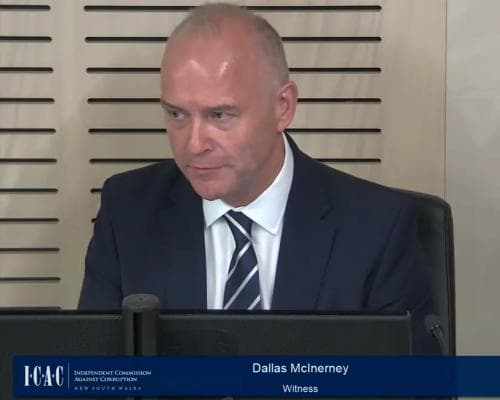
Dallas McInerney, the chief executive of Catholic Schools NSW, sat before Icac on Friday and insisted the payments were not a sham. He described them as legitimate contracts with Beckington and JPG Advisory, firms run by Reformers Christian Ellis and Jeremy Greenwood. Yet the commission has heard that Robert Assaf and Dylan Whitelaw, employees of Catholic Schools NSW, spent work hours on factional efforts—recruiting members, stacking branches, pushing for harder lines on abortion, euthanasia, and same-sex marriage. The union for independent school teachers, the IEU NSW/ACT branch, broke its silence to demand 'greater scrutiny' of how public funding flows through organizations like Catholic Schools NSW. Carol Matthews, the branch secretary, put it bluntly: the checks that apply to direct government grants simply don't extend to intermediary bodies that distribute funds on behalf of diocesan schools.
This is where the story pivots from political gossip to a systemic tech gap. Australia's public finance oversight relies on manual audits, whistleblower reports, and the occasional Icac hearing—tools that are reactive, slow, and easily gamed. Invoices can be relabeled, hours can be reclassified, and paper trails can be laundered through shell companies. The Reformers' alleged scheme exploited exactly this opacity: a $130,900 invoice to Beckington for 'consulting' that was, according to Icac, actually funding factional work. No algorithm flagged the anomaly. No automated system cross-referenced employee timesheets with lobbying invoices. No machine learning model detected the pattern of payments flowing to a firm run by the same people coordinating political recruitment. In a world where banks use AI to spot money laundering in milliseconds, public education funding remains stuck in the 20th century.
The technology to fix this exists. Forensic analytics platforms can map financial flows across entities, flag unusual payment patterns, and correlate them with employee activity—think Palantir for public school budgets. The Australian Taxation Office already uses machine learning to detect tax evasion; the NSW Department of Education could deploy similar tools to monitor the hundreds of millions it channels through Catholic Schools NSW each year. But the political will is missing. Catholic Schools NSW is a powerful lobby in its own right, with direct lines to both major parties. The Reformers' factional ambitions—more conservative policies on social issues—are not fringe; they represent a growing strain in Australian conservatism that sees public funding as a means to shape culture, not just educate children. That's why the Icac inquiry is more than a corruption case; it's a stress test for whether Australia's governance frameworks can handle the intersection of money, ideology, and public trust.
Globally, similar scandals have triggered tech-driven reforms. In the US, the E-Rate program for school internet funding now uses automated vendor vetting after a 2019 fraud case. In the UK, the Department for Education's 'Academies Financial Handbook' mandates real-time digital reporting for all academy trusts. Australia lags. The IEU's call for greater scrutiny is a start, but it's a plea for more manual oversight—more auditors, more paperwork, more human judgment. That's necessary but insufficient. The real innovation would be building an AI-powered transparency layer that sits atop every public funding stream, automatically flagging anomalies in real time. Think of it as a 'Sentinel for Schools'—a system that learns the normal patterns of education spending and raises a red flag when a $130,900 consulting invoice appears from a firm run by a political operative.
What would that look like in practice? Imagine a dashboard where every payment from Catholic Schools NSW to any vendor is matched against a database of political donors, lobbyists, and factional affiliates. Imagine employee timesheets automatically cross-referenced with meeting calendars, email metadata, and external event participation. Imagine a predictive model that scores the risk of each funding arrangement based on historical fraud patterns. This isn't science fiction; it's the kind of technology already used in healthcare fraud detection and defense contracting. The barrier isn't technical—it's cultural. Institutions like Catholic Schools NSW guard their autonomy fiercely, and politicians on both sides benefit from opaque funding flows. The Reformers' alleged scheme is just one example of a broader ecosystem where public money becomes a political slush fund.
But the tide is turning. Australia's anti-corruption bodies are getting sharper teeth, and public anger over perceived elite impunity is rising. The Icac inquiry, regardless of its final findings, has already exposed a governance hole that demands a technological response. The forward-looking move is not just to punish the wrongdoers—if any are found—but to build systems that make such schemes nearly impossible. That means investing in AI-driven audit tools, mandating real-time financial transparency for all entities receiving public funds, and creating an independent oversight body with the authority to access data, not just paper records. The Catholic Schools NSW case is a warning shot. The next scandal won't wait for a whistleblower; it will be caught by an algorithm—if we have the courage to build one.
For now, McInerney's defense—that the payments were for 'consulting'—will be tested against the evidence. But the deeper question is whether Australia's governance can evolve beyond the paper-based, trust-but-verify model that failed here. The technology exists. The will is the missing variable. As the inquiry continues, one thing is clear: the future of public accountability will be written in code, not just in court transcripts. The only question is whether we'll write that code before the next scandal breaks.