The Last Great Spectacle: Inside the 2026 World Cup Final's Most Coveted Seats
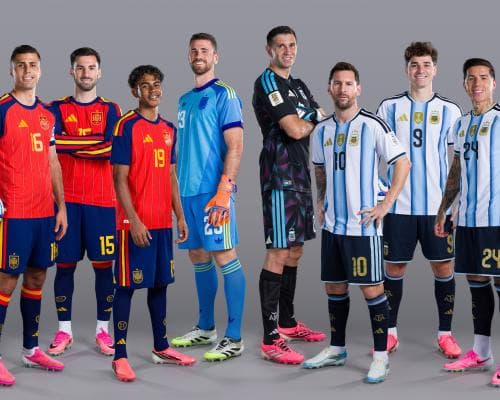
The scoreboard read 6-4 in the third-place playoff—a scoreline that sounds less like football and more like a chaotic afternoon at Wimbledon. Yet for those who were there, ringside in the climate-controlled suites of the host stadium, the absurdity was part of the charm. England had just beaten France in a ten-goal thriller, a match that felt more like a lavish dinner party gone gloriously off-script. And now, the main course: Spain versus Argentina, the champions of Europe against the champions of South America, with Argentina chasing a fourth World Cup and a second consecutive title—a feat unseen since Pelé's Brazil in 1962.
For the collector of experiences, this final is the ultimate acquisition. It is not merely a game; it is a summit of heritage, rivalry, and raw, untethered emotion. The ultra-wealthy do not buy tickets—they buy access. And access to this final, played in a stadium whose name will be whispered in the same breath as Maracanã and Wembley, is the season's most coveted credential. The hospitality packages—starting at $15,000 per person for a seat with a view of the pitch and a sommelier—sold out within hours of the draw. Those who missed out turned to secondary markets, where a single ticket in the executive club level now changes hands for sums that could purchase a small sailboat.
The craftsmanship of this event is invisible to the broadcast camera. It lives in the chilled rosé served in crystal flutes during the halftime interval, in the private lounges where former Ballon d'Or winners mingle with hedge fund titans, and in the seamless choreography of private car transfers that whisk guests from their Gulfstreams to their seats without a single glance at a queue. The 2026 World Cup, with its expanded 48-team format and 104 matches, has been described by insiders as the most logistically ambitious sporting event in history. For the luxury traveler, it is also the most immersive: a five-week itinerary that hops from host city to host city, each leg curated by a personal travel director who ensures that the best table at the city's finest restaurant is always waiting.
Market context matters here. Since the 2018 World Cup in Russia, the secondary market for final tickets has appreciated faster than blue-chip art. A 2022 final ticket in Qatar, originally priced at $1,600, traded for $12,000 on the resale market. For 2026, with demand amplified by the tournament's return to North America and the historic stakes of a Spain-Argentina showdown, analysts at luxury travel firm Virtuoso report that their top-tier clients are spending an average of $85,000 per person for a week-long package that includes the final, semi-finals, and curated cultural excursions. This is not a purchase; it is a portfolio allocation into memory.
What this signals about luxury taste is a shift from owning things to owning moments. The new status symbol is not a watch or a car—it is a story. And the story of being in the room when Argentina's Lionel Messi—if he plays—lifts a second consecutive World Cup, or when Spain's young core cements a dynasty, is a story that cannot be replicated. It is the kind of story that gets told at dinner parties in Gstaad and on yachts in St. Tropez, where the listener leans in and the teller casually mentions the private tasting menu served during extra time.
Looking forward, the 2026 final may well be remembered as the peak of a golden era—a moment when the worlds of sport and luxury converged so completely that the match itself became almost secondary to the theater surrounding it. For those who were there, the score will fade. What will remain is the electric hum of a stadium holding its breath, the clink of glasses as a goal is scored, and the quiet satisfaction of having been present at the exact intersection of history and indulgence.