The Hidden Fragility of Europe's Power Grid: Why the Ultra-Wealthy Are Watching the Wires
On a sweltering Thursday morning in July, while the rest of Britain queued for iced coffee and prayed for a breeze, something far more interesting was happening in the wires above their heads. At 10am, a fifth of the country's electricity was being imported from the continent. France alone was supplying 11% of British demand—more than double what the UK's entire windfarm fleet could muster at that moment. The solar eclipse earlier in the year had been a dry run, a gentle warning. This was the real thing: a heat dome, a low-wind day, and a stark reminder that the modern luxury of flicking a switch is built on a web of cables that stretch under the English Channel like gossamer threads. For the ultra-wealthy, who rarely think about where their power comes from—unless it's the power of a new Bugatti—this is the quiet threat that could disrupt the seamless rhythm of their lives.
The economics of these interconnectors are seductive. They promise security through sharing, a kind of energy mutual fund. When the UK's renewables are overproducing on a blustery day, the surplus flows east. When the continent's nuclear plants are humming, the power flows west. Over a year, Britain imports roughly a tenth of its electricity, and on days like that Thursday, it's simply cheaper to buy from France's nuclear fleet than to fire up domestic gas plants. But here's the rub: the politics are messier than a hedge fund's quarterly report. In June, the National Energy System Operator (Neso)—the state-owned body that keeps Britain's lights on—abruptly cut exports to the Netherlands during a tense evening when the grid's frequency dipped below operational limits for almost two hours. Then, in July, Neso quietly ordered traders not to export via four interconnectors during several hours of the day-ahead market, ensuring domestic supply. The message to Europe was clear: Britain will look after its own, thank you very much.
This is the new energy nationalism, and it's not just a British quirk. Norway, with its vast hydro reserves, has banned new interconnectors after a consumer backlash. The result is a patchwork of self-interest that undermines the very idea of a unified European grid. Phil Hewitt, a director at the energy market specialist Montel, notes that Neso's last-minute redispatching of interconnectors can cause real trouble for smaller markets like Belgium and the Netherlands. The contractual setup was even changed in May to limit late directional changes on six links to no more than 300 megawatts per cable—a band-aid on a system that's starting to fray. Independent analyst Peter Atherton puts it more bluntly: "The UK is potentially seen as the weak link in the European system." For those who own property in multiple countries—a chalet in Gstaad, a penthouse in Mayfair, a villa in the South of France—this fragility is not an abstraction. It's the difference between a seamless summer and a scramble for generators.
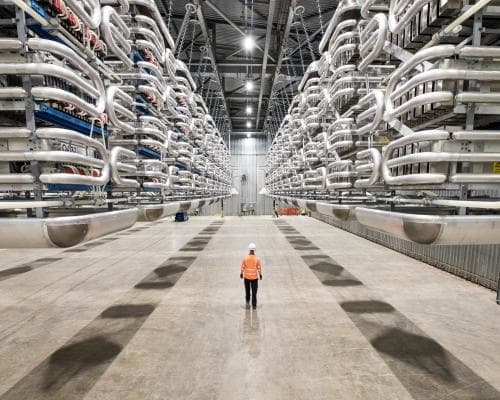
Craftsmanship and heritage are the usual currencies of luxury, but here the craft is in the engineering, and the heritage is in the very idea of a continent that shares its power. The interconnectors themselves are marvels: high-voltage cables that snake along the seabed, capable of moving gigawatts in milliseconds. Yet they are only as strong as the political will that supports them. The summer heatwaves have exposed their limits. Demand for air conditioning soars, gas turbines lose efficiency in the heat, and French nuclear reactors struggle with warmer rivers used for cooling. Add in scheduled maintenance during the summer months, and you have a perfect storm of vulnerability. The system worked on that Thursday, but barely. It's like a bespoke suit that fits well until you gain five pounds—then it's a reminder that even the finest tailoring has its limits.
For the ultra-wealthy, this is a signal to think beyond the usual portfolio of assets. Energy security is becoming a status marker, as tangible as a private jet or a wine cellar. The smart money is already moving toward self-sufficiency: solar arrays on rooftops, battery storage in basements, and even microgrids that can island themselves from the larger network. The luxury market is responding, too. High-end home builders now offer "energy independence packages" as standard, and there's a growing niche for consultants who advise on cross-border energy arbitrage—essentially, hedging your electricity supply like a commodity. The irony is that the very interconnectors designed to bring Europe together are now highlighting its divisions. But for those who can afford to, the solution is to opt out of the system entirely. The future belongs to those who can generate their own power, store it, and laugh at the next heat dome. The rest will be left to watch the wires, hoping they hold.
As the autumn approaches, the real test will come with winter, when demand spikes and the politics of energy get even more contentious. The UK's imports are likely to rise, and the continent's patience may wear thin. But for the truly prepared, this is not a threat—it's an opportunity. The ability to live beyond the grid is the ultimate luxury, a form of freedom that money can still buy. The question is not whether the system will hold, but who will be left holding the plug.
The Experience
For a private consultation on energy independence for your estate or portfolio, contact our lifestyle desk to arrange a bespoke briefing with leading energy security specialists.