Oil at $73 and a Nuclear Program 'Destroyed': Vance’s Iran Bet Puts Energy Markets in a Volatility Trap
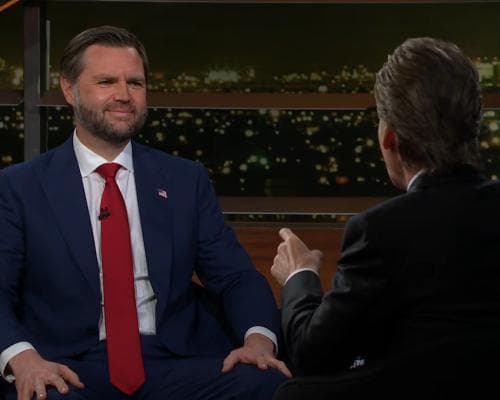
When the Vice President of the United States tells a late-night audience that America holds 'all the cards' in Iran and will win 'either way,' markets should listen—not for the geopolitical bravado, but for the price of oil. JD Vance’s appearance on HBO’s *Real Time with Bill Maher* on Friday was ostensibly a book tour stop, but it doubled as an unscheduled briefing on the most consequential energy trade of the year. His core thesis—that the 60-day memorandum of understanding with Iran has functionally destroyed Tehran’s nuclear program and driven crude down to $73 a barrel—sounds like a victory lap. Yet within hours of his remarks, a tanker was struck by a projectile in the Strait of Hormuz, and both Washington and Tehran launched retaliatory strikes in the worst escalation since the interim peace deal was signed. The gap between Vance’s confident narrative and the on-the-ground reality is exactly the kind of asymmetry that moves capital.
The scale of the weekend’s events cannot be overstated for anyone managing a multi-asset portfolio. The Strait of Hormuz handles roughly 20% of the world’s oil transit—about 17 million barrels per day. Saturday’s attack on a tanker followed a separate strike on a cargo ship on Thursday, which triggered the initial hostilities. The US military confirmed it hit Iranian targets overnight, while Iran claimed it struck targets linked to US forces in response. This is not a negotiation breakdown; it is a kinetic escalation dressed in diplomatic language. Vance acknowledged that the MOU is 'always going to be a little messy when you’re dealing with the Iranians,' but 'messy' is not a term any serious commodities desk uses to describe a naval engagement in the world’s most strategic waterway. The immediate market reaction was muted—crude futures opened only modestly higher on Monday—but that calm is deceptive. The real money is being made in volatility options, not outright direction.
The mechanics of this standoff are critical for understanding the wealth implications. Vance pointed to the increased flow of oil through Hormuz as 'a signal that there’s something real going on,' implying that the MOU has unlocked supply. Yet the data tells a more nuanced story. Iran’s oil exports have risen to roughly 1.5 million barrels per day under the Trump administration’s 'maximum pressure' approach, but much of that volume flows through opaque channels—ship-to-ship transfers, ghost tankers, and Chinese teapot refineries. The $73-a-barrel price that Vance cited is a function of global demand concerns, not a structural supply glut. The International Energy Agency’s latest monthly report shows global oil inventories are actually tightening, with OECD commercial stocks running 34 million barrels below the five-year average. If Hormuz traffic is disrupted for even a week, the Brent benchmark could spike past $85, wiping out the 'peace dividend' that Vance is touting. For institutional investors, the risk is not that the deal collapses—it’s that the deal was never fully priced in.
The players involved in this capital story extend far beyond the White House and the Iranian presidency. On the US side, the key figure is not just Vance but the constellation of private-equity-backed energy traders and hedge funds that have been shorting volatility in crude options since the MOU was signed. These funds have collected billions in premium by selling puts and calls at narrow strike prices, betting that the market would remain range-bound between $70 and $75. That trade is now dangerously exposed. On the Iranian side, the Islamic Revolutionary Guard Corps controls the maritime militias and missile batteries that threaten Hormuz, and its economic interests are directly tied to sanctions evasion networks that span the UAE, Iraq, and Turkey. The IRGC’s shadow fleet—estimated at 300 to 400 vessels—is the single largest unregulated source of crude supply outside OPEC. Any disruption to that fleet, whether from US naval interdiction or Iranian retaliation, would create a supply gap that no SPR release could fill. The wealth managers who understand this are not betting on a deal; they are hedging with long-dated call spreads and physical storage plays.
For the ultra-wealthy, the Vance interview is a reminder that geopolitical narratives are often lagging indicators. The Vice President’s claim that Iran’s nuclear program is 'functionally destroyed' may be accurate in the narrow sense of enrichment capacity, but it ignores the broader reality that Iran has spent two decades building a network of proxies and asymmetric capabilities that make a conventional military victory nearly impossible. The 60-day MOU is a tactical pause, not a strategic settlement. The real capital angle here is the rarity of genuine stability in the Middle East. Over the past 50 years, every major peace deal in the region—from Camp David to the Abraham Accords—has been followed by a period of suppressed volatility that eventually broke when underlying tensions resurfaced. The current moment is no different. The wealthy families and family offices that have been rotating into infrastructure and energy assets in the Gulf are doing so on the assumption that the risk premium has permanently declined. That assumption is now being tested.
Looking forward, the market signal from this weekend’s escalation is clear: the 'either way' thesis that Vance articulated is a binary fallacy. In financial terms, 'either way' implies a hedged outcome, but the reality is that both scenarios—a messy deal or a full breakdown—carry asymmetric risks for oil prices. A messy deal keeps Iranian supply in the market but at unpredictable volumes, creating a persistent tail risk of sudden disruption. A full breakdown removes 1.5 million barrels per day of Iranian exports and risks a wider conflict that could shut Hormuz entirely. For wealth builders, the prudent move is to recognize that the volatility regime has shifted from low to moderate, and to adjust allocation accordingly. The days of selling gamma on crude are numbered. The smartest capital will be deployed not in betting on a winner, but in owning the assets that benefit from uncertainty: midstream infrastructure, LNG export terminals, and diversified commodity indices. Vance may believe America wins either way, but in the markets, the only winners are those who position for the volatility that the politicians refuse to acknowledge.


