The Hidden Cost of a Summer Idyll: Why Britain's Wild Places Are Demanding a New Etiquette
There is a particular kind of silence that falls over a heathland at dusk. It is the sound of a landscape holding its breath—a world of gorse and heather, of nightjars nesting low in the undergrowth, of adders slipping through the bracken. For the seasoned traveler, this is the true luxury: not a five-star suite, but a front-row seat to nature's most private theatre. Yet this summer, that theatre is burning. And the culprit, more often than not, is a £5 tin tray of charcoal, abandoned in the undergrowth.
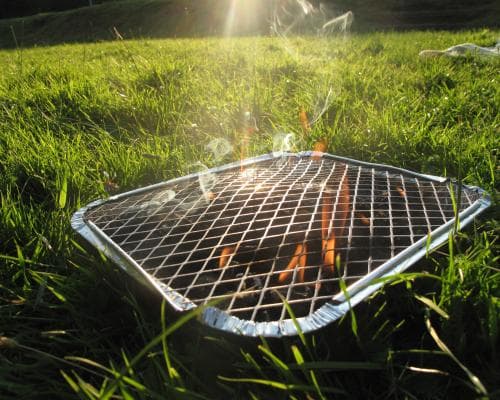
Andy Burnham, the Mayor of Greater Manchester, has now called for a ban on disposable barbecues as wildfires rage across the UK. It is a measure that feels both overdue and oddly symbolic. For those of us who chronicle the habits of the wealthy, the disposable barbecue is hardly a staple of the jet set. But the fire it ignites is a shared catastrophe. In July, firefighters were called to Cannock Chase, a designated Area of Outstanding Natural Beauty, to find a blaze the size of a football field tearing through the Sherbrook Valley. The heathland—home to protected nightjars, adders, and toads—was devastated. The cause? A single disposable barbecue, its coals still smouldering hours after a picnic had ended.
This is the quiet irony of the modern luxury traveler: we will fly to the Serengeti to watch a lion at dawn, yet we will think nothing of leaving a smouldering tray of coals on a fragile moorland. The damage is not abstract. These fires destroy nests, kill chicks, and scorch the very soil, leaving scars that take decades to heal. The heathland, which once took centuries to form, can be erased in an afternoon. And unlike a safari lodge that can be rebuilt, a wild habitat is irreplaceable. The wealthy understand rarity—it is the very currency of their world. Yet here, the rarest thing of all is a landscape left untouched.
The problem with the disposable barbecue is not just that it is carelessly discarded. It is that it remains dangerously hot for hours, sometimes reaching 450C, and can continue to burn underground if buried. On beaches, the buried coals are a hazard for walkers and farm animals; in fields, they turn into invisible traps. For the luxury traveler, this should be a call to a higher standard of care. The true connoisseur of wild places knows that access is a privilege, not a right. It is the difference between a visitor and a guest—and a guest leaves no trace.
There is a growing movement among the ultra-wealthy to seek out 'rewilded' experiences—private reserves, conservation-led safaris, and eco-lodges that promise both comfort and conscience. But the UK's own wild spaces are often overlooked, dismissed as too tame, too close to home. Yet Cannock Chase, the Peak District, the Lake District—these are the original luxury destinations, the ones that inspired Wordsworth and Turner. They are also the most fragile. A ban on disposable barbecues is a start, but the deeper shift must be cultural. The wealthy have always led by example; it is time they did so here, trading the convenience of a foil tray for the ritual of a proper picnic hamper, the kind that comes with porcelain plates and a thermos of tea.
What this moment signals is a broader evolution in luxury travel: the move from consumption to preservation. The new status symbol is not a private island or a first-class cabin, but a proven commitment to leaving places better than you found them. For the discerning traveler, this means choosing destinations that actively protect their ecosystems, supporting lodges that employ local rangers, and, yes, refusing to light a disposable barbecue on a heatwave afternoon. It is a small act, but it is the kind of small act that defines a legacy.
As the summer heat grows more intense, and the fires more frequent, the question is no longer where the wealthy will go next—but how they will go. The wild places of Britain remain open, their heather blooming, their nightjars calling. They are waiting for a new kind of traveler, one who understands that the ultimate luxury is not in having, but in preserving. So pack the linen napkins, the chilled rosé, the artisan cheese. Leave the disposable barbecue at home. The heathland will thank you—and so will the generations of travelers yet to come.