The Glow-Worm Express: Northern NSW’s 135km Rail Trail Beckons the Discerning Cyclist
Paul Hixon peers into the deepest black of the Burringbar tunnel, his daughters’ breath held in anticipation. There, in the absolute dark, glow-worms shimmer like a constellation fallen to earth. It’s a moment that belongs not to a gallery or a private resort, but to a half-built rail trail in northern New South Wales—a 135km ribbon of possibility that, if completed, would rival the world’s great cycling routes. For those who collect not objects but experiences, this is the rarest kind of luxury: a journey that transforms the ordinary into the sublime.
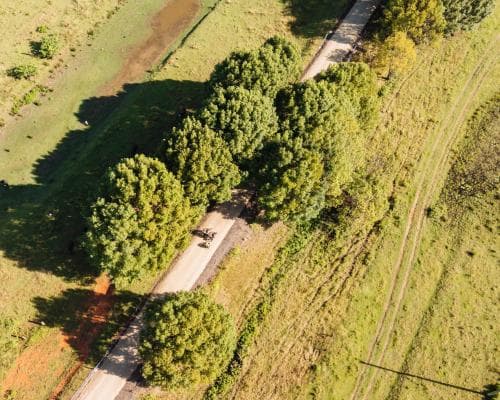
The northern rivers rail trail is a study in contrasts. It begins among the sugarcane fields of the Tweed, where the air is thick with sweetness and the horizon is a flat, green line. Then it plunges into rainforest so dense that the light filters through like stained glass. A woman stops to read her book on a track-side bench, her only companions the rustle of leaves and the distant cry of a lyrebird. A young couple on a date watches the riders pass, their conversation a murmur in the cathedral of trees. This is not a commute; it’s a pilgrimage. And the object of that pilgrimage is a missing link—54km of track that would connect the existing halves, from Murwillumbah south through Mullumbimby and Byron Bay, then west to Bangalow, Lismore, and Casino. The vision is a continuous loop of discovery: canefields, ocean, rolling hills, and hinterland.
The craftsmanship here is not in metal or stone, but in the land itself. The nine tunnels along the route, carved by hand over a century ago for steam trains, are now colonized by glow-worms and microbats. The longest, at Burringbar, is a 500-metre passage through a hill that feels like a secret passage in a grand estate. The track bed, once laid for locomotives, is now a gravel path that demands a sturdy tire and a patient spirit. The rarity? This is not a manicured cycleway; it’s a living museum of Australian geology and ecology. The price? For now, it’s free—but the cost of completion is $42 million in federal grant funding, a sum that was denied in June, leaving the project in limbo. The mayor of Byron Shire, Sarah Ndiaye, called the decision “heartbreaking.” She had waited years for a yes, only to watch smaller projects get funded instead. For the ultra-wealthy, that denial is a kind of exclusivity: the trail remains a half-finished masterpiece, known only to those who seek it out.
In the world of luxury collectibles, scarcity is everything. A rare whisky, a limited-edition hypercar, a private island—all derive their value from being hard to attain. The northern rivers rail trail is no different. Its incomplete state makes it a secret shared among those who know: the cyclists who ride the existing 81km, the glow-worm hunters who brave the tunnel’s dark, the book readers who claim a bench in the rainforest. For the collector of experiences, this is a chance to ride a route that may never be finished, to witness a landscape that is both ancient and fragile. It’s the kind of story that unfolds over a dinner at a private club in Sydney or Melbourne, whispered among those who have pedaled through the Burringbar tunnel and seen the microbats stir.
What does this say about luxury taste in 2025? It signals a shift from the ostentatious to the immersive. The ultra-wealthy no longer want just a car or a watch; they want a narrative. They want to feel the grit of gravel under their tires, the cool breath of a tunnel’s air, the thrill of discovering a glow-worm in the dark. This trail is a canvas for that narrative—a slow, deliberate journey through a landscape that rewards patience and curiosity. It’s not about speed; it’s about presence. And in a world of instant gratification, presence is the ultimate luxury.
Looking forward, the trail’s future remains uncertain. The $42 million funding gap could be filled by private investment—a consortium of philanthropists, perhaps, or a luxury travel brand seeking a signature experience. Imagine a curated five-day ride, starting with champagne among the canefields, stopping for lunch at a hinterland winery, and ending with a private dinner under the stars at Byron Bay. The rail trail is not just a path; it’s a platform for the kind of bespoke adventure that defines modern luxury. Until then, it remains a hidden gem, waiting for those who know where to look—and who are willing to pedal a little harder to find it.