The Identity Paradox: Julian Nagelsmann and Germany’s Search for a New Lexicon of Luxury
There is a particular tension that arises when an institution of impeccable provenance begins to question its own narrative. For the ultra-wealthy, the patina of heritage is often the single most prized attribute—a vintage Rolls-Royce, a first-growth Bordeaux, a bespoke suit from a Savile Row house that has dressed kings. Yet even the most hallowed lineages must evolve, and the process is rarely seamless. Witness the current state of the German national football team, a brand as globally recognized as any luxury marque, now navigating a delicate identity crisis under the stewardship of its young, brilliant, and sometimes brittle head coach, Julian Nagelsmann.
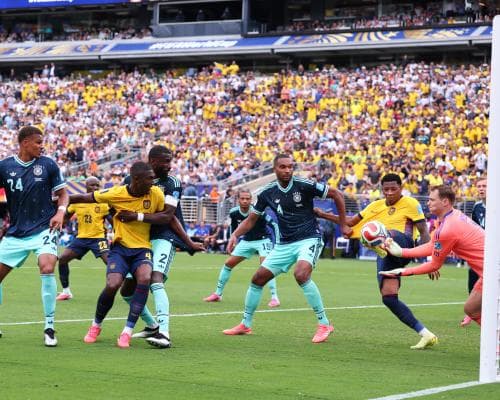
The scene in the post-match mixed zone after Germany’s 2-1 loss to Ecuador was a masterclass in cognitive dissonance. Nagelsmann, a man whose tactical mind is often compared to a high-frequency trading algorithm, bristled at the suggestion that his players had lacked desire. “They didn’t want it more,” he insisted, his words carrying the clipped precision of a man who expects his logic to be accepted as gospel. Yet moments later, his own players—Joshua Kimmich and Deniz Undav, both men of considerable on-field intelligence—offered a contradictory refrain: the opponent had simply wanted it more. This is not merely a locker-room squabble; it is a fracture in the very narrative architecture of a team that once defined itself by an unassailable, almost robotic, will to win. For the collector, this is akin to discovering that a Patek Philippe perpetual calendar has a misaligned moonphase—the mechanics are flawless, but the story has lost its coherence.
The deeper malaise, however, is personified by a figure who exists both inside and outside the camp: Jürgen Klopp. His omnipresence as a pundit, a face in the stands, and a brand ambassador for various premium beverages has created an impossible shadow. Klopp represents the charismatic, emotional, almost artisanal approach to leadership—the kind of bespoke, human-centric touch that the luxury world reveres. Nagelsmann, by contrast, is the hyper-modernist, the data-driven architect who designs experiences with the cold precision of a Swiss watchmaker. The tension between them is not personal; it is philosophical. It is the same tension that exists between a hand-stitched leather trunk from a 19th-century atelier and a carbon-fiber monocoque from a contemporary hypercar manufacturer. Both are objects of desire, but they speak different languages.
For the discerning observer—the kind who reads this desk—this is not a story about football. It is a parable of brand management in an era of fragmentation. Germany’s 7-1 demolition of Curaçao was statistically the tournament’s most dominant performance, yet it felt hollow, a display of raw power without the accompanying narrative of purpose. The team has emerged from its group for the first time since 2014, a milestone that should be celebrated, yet the mood is one of unease. This is the luxury consumer’s ultimate fear: the possession that is objectively magnificent but fails to evoke the intended emotion. A Bugatti Veyron is an engineering marvel, but if it sits in a garage without a story—a journey, a passion, a purpose—it is merely a very expensive sculpture.
What Nagelsmann is attempting, in real time, is the curation of a new identity. He is trying to reconcile the rigid, mechanistic perfectionism of Germany’s past with a more fluid, improvisational future. It is a project that will be judged not by a single match, but by the coherence of the final product. The market, in this case the global football audience and the sponsors who underwrite it, is watching with the same hawkish attention that a Sotheby’s specialist gives to a newly discovered Old Master. Will this team become a classic, its value appreciating over decades? Or will it be a footnote, a failed experiment from a transitional period?
The true luxury, in the end, is not victory—it is conviction. The most prized objects in any collection are those that know exactly what they are, whether that is a minimalist Jil Sander suit or a maximalist Fabergé egg. Germany, under Nagelsmann, has not yet found that conviction. The team is rich in talent, deep in heritage, and backed by an infrastructure that any other nation would envy. But until the message from the coach aligns perfectly with the performance on the pitch—until the story and the object become one—it will remain a work in progress. For the ultra-wealthy, who understand that the greatest luxury is authenticity, this is the most compelling drama of the tournament. The outcome is uncertain, but the process is fascinating.


