Venezuela’s $6.7B Quake Wreck: A Stress Test for Sovereign Credit and Capital Flight
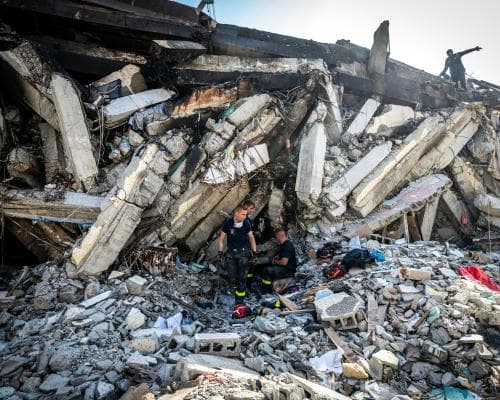
The earth moved last Wednesday, but the aftershocks for capital markets will be measured in spreads, not seismic waves. Venezuela’s twin tremors—7.2 and 7.5 magnitude, shallow and devastating—have left at least 1,450 dead, tens of thousands missing, and an economic wound equivalent to 6% of the nation’s GDP. For the wealth desk, this is not a humanitarian tragedy alone; it is a hard data point on sovereign fragility, a stark reminder that the cost of kleptocracy is eventually priced into every bond, every currency peg, and every offshore account.
The scale of the destruction is staggering. The United Nations estimates $6.7 billion in damage to infrastructure, including 38 hospitals that now require repairs. UNICEF reports 1.8 million people in urgent need of aid. But the financial story lies deeper: Venezuela’s GDP was already contracting at a double-digit clip, inflation was hyper, and oil production—the country’s only meaningful revenue source—had fallen below 800,000 barrels per day. A 6% GDP hit from a single event, in a nation with zero fiscal buffer and no access to international capital markets, is a balance-sheet event that will ricochet through distressed-debt desks from New York to London.
The mechanics are brutal. Venezuela’s government, led by acting president Delcy Rodríguez, has been caught flat-footed, with survivors heckling her during a Caracas tour. The regime has poured resources into security forces and military repression, not emergency response. As political scientist Orlando J. Pérez noted, disasters force governments to show what they can actually do with public money. What Venezuela’s rulers have demonstrated is a state equipped to obstruct but not to aid. For investors holding Venezuelan sovereign bonds—already trading at pennies on the dollar—this is another notch of impairment. The probability of any restructuring that respects creditor claims just dropped further.
Rarity and heritage are not the angles here; rather, it is the capital-flight signal. Wealthy Venezuelans have been moving assets offshore for years, but a disaster of this magnitude accelerates the exodus. Real estate in Miami’s Brickell and coastal Spain will see another bid. Gold and hard assets will find new Venezuelan buyers. The $6.7 billion damage figure is a floor; the real wealth destruction includes lost productive capacity, human capital flight, and the permanent scarring of any remaining institutional trust. For family offices and private wealth managers, the lesson is to monitor sovereign fragility indices as closely as P/E ratios.
What does this signal for markets? First, it reinforces the risk premium on any emerging-market exposure tied to weak institutions. Venezuela’s bonds are effectively worthless, but the contagion effect will be felt in neighboring jurisdictions—Colombia, Peru, even Brazil—where investors will demand higher yields for political risk. Second, it validates the thesis that commodities-dependent regimes without fiscal discipline are uninvestable. Oil revenues masked the rot; the earthquake has exposed the skeleton. Third, for the wealthy, the trend is stable in the sense of persistent decay: Venezuela’s trajectory is downward, and this event locks in that path.
The forward-looking close is grim but instructive. The Trump administration has made promises about restoring democracy in Venezuela, but the earthquake tests those promises against reality. State capacity is not built by sanctions alone; it requires investment in infrastructure, emergency services, and governance. For now, the smartest capital will continue to avoid Venezuelan exposure entirely, while opportunistic distressed-debt funds may circle, hoping for a political breakthrough that remains distant. The quake has rearranged the ground—both literal and financial—and the wealthy would be wise to read the seismic data as a sell signal on any asset tied to the Maduro regime.


