The Golden Skewer: Why the World’s Elite Are Rediscovering the Art of the Perfect Chicken Souvlaki
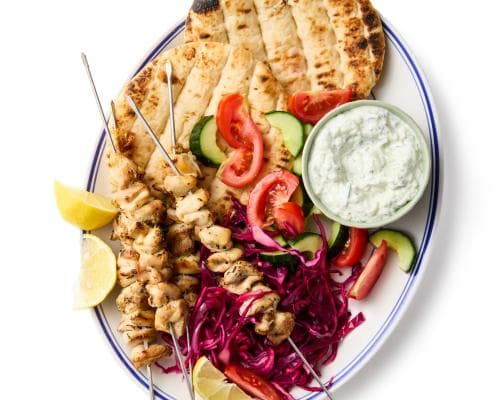
For those accustomed to orchestrating multi-course tasting menus aboard their superyachts or commissioning private chefs for a weekend in Mykonos, the true measure of culinary sophistication is not the rarity of an ingredient but the mastery of a simple form. In the rarefied circles of the global elite, where every meal is a statement, the humble chicken souvlaki has quietly ascended to a symbol of refined taste—a dish that demands precision, provenance, and an almost obsessive attention to detail. This is not street food; this is a quiet rebellion against the over-engineered, a return to the elemental pleasures of smoke, fire, and perfectly charred meat.
The dish’s roots run deep, straight into the pages of Homer’s Iliad, where the ancient pleasure of grilling skewered meat over an open flame was already a celebrated ritual. Today, the debate among connoisseurs is as nuanced as any Grand Cru classification: Greek versus Cypriot, souvla versus souvlaki, the precise dimensions of the cube. For the discerning palate, chicken has become the preferred canvas—a lean protein that, unlike pork or lamb, demands an almost surgical approach to moisture and seasoning. The numbers, too, are telling: a single, perfectly executed chicken souvlaki skewer, when sourced from free-range, organic poultry and grilled over imported Greek charcoal, can command a price that rivals a tasting portion of wagyu in a Michelin-starred dining room.
The craftsmanship lies in the invisible details. The ideal chunk is exactly three centimeters—small enough to cook through before the exterior burns, large enough to retain a succulent core. The marinade is the signature: a yogurt-based emulsion, infused with garlic, lemon zest, and the finest extra-virgin olive oil from a single-origin grove in Crete, works its magic in just thirty minutes, softening the meat without the rubbery texture that a brine can impart. The heat must be fierce and consistent—a proper foukou charcoal grill, not a gas-powered imitation—and the cook must possess the restraint to pull the skewer the moment it is done. Overcooking is the unforgivable sin, a breach of the unspoken code that separates the amateur from the aficionado.
This resurgence signals a broader shift in the luxury market: a move away from conspicuous consumption toward what might be called “connoisseurial minimalism.” The ultra-wealthy are increasingly investing in experiences that require knowledge, not just capital. To serve a perfect chicken souvlaki at a private beachside dinner on Paros is to communicate that you understand the difference between souvlaki and kalamaki, that you know why the thigh is superior to the breast, and that you have the discipline to source your charcoal from a specific forest in the Peloponnese. It is a quiet flex, one that whispers of time, travel, and a network of trusted purveyors.
Looking ahead, the trend shows no signs of cooling. As private chefs and luxury retreats compete to offer the most authentic yet elevated versions of regional classics, the chicken souvlaki will continue to evolve—perhaps with a truffle-infused marinade or a side of hand-harvested sea salt from the Cyclades. But the essence remains unchanged: a dish that, in its perfect execution, is worth far more than the sum of its parts. For those who can afford to travel anywhere and eat anything, the ultimate luxury is a meal that tastes of nowhere else.
The Experience
To experience this level of culinary artistry, book a private grilling masterclass with a Michelin-starred chef on a secluded Greek island, or commission a bespoke charcoal grill from a Florentine artisan.