Thailand's School Shooting Exposes the Hidden Cost of a Booming Economy
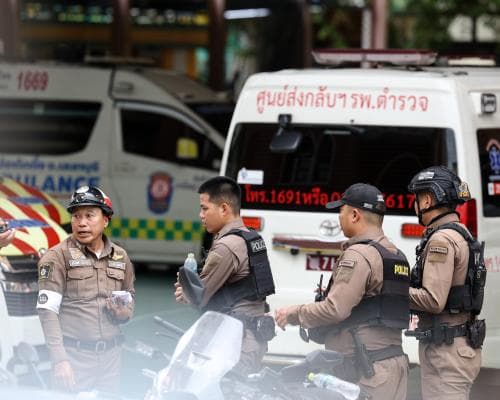
The first shots weren't fired at the school. They were fired at the grandparents' house, a quiet, domestic act of violence that would end two lives before the shooter even got to campus. By the time the 14-year-old ninth-grader reached the Debsirin Nonthaburi School on Bangkok's outskirts, he had already used his grandfather's handgun to kill the couple, then turned the weapon on three teachers and three students before taking his own life. Police found 26 spent shell casings and another 34 rounds of live ammunition at the scene. The body count: eight dead, a community shattered, and a country that has now seen two school shootings in a single year.
For the money crowd, this isn't just a crime story. It's a market signal — a grim one. Thailand, a country often pitched to foreign investors as a stable, low-cost manufacturing hub and a paradise for retirees, is grappling with a darker undercurrent. The shooting at Debsirin, a school with royal roots and an alumni list that includes prime ministers and scholars, strikes at the heart of the country's elite education system. This isn't a remote, impoverished province; it's Nonthaburi, a province that borders Bangkok and is part of the sprawling metropolitan area that drives a significant chunk of Thailand's GDP. When violence hits the children of the middle and upper classes, it hits the narrative that Thailand is a safe place to park capital and raise a family.
The mechanics of the attack are almost too clinical. The suspect, a student at the school, used his grandfather's registered handgun — a detail that underscores a growing problem across Southeast Asia: the proliferation of legally owned firearms that end up in the wrong hands. Thailand has one of the highest rates of gun ownership in the region, and while the country's strict licensing laws are supposed to prevent exactly this kind of tragedy, they clearly didn't. The suspect's age — 14 — is a chilling reminder that mental health crises don't wait for adulthood. And the fact that the attack happened at a school with an enrollment of roughly 3,100 students and 147 teachers means the trauma is now embedded in a community that includes some of the country's future business leaders and political elite.
The financial angle here is uncomfortable but unavoidable. This shooting is a direct hit to Thailand's 'human capital' story. The Debsirin network of schools is a feeder for the country's top universities and, by extension, its corporate boardrooms. When a student can walk into a classroom and open fire, the perception of safety — a key factor for both domestic and foreign direct investment — takes a hit. We've seen this pattern before. In the United States, school shootings have led to higher 'security spending' in affluent districts, driving up property values in gated communities and pushing demand for private security. The same dynamic is now playing out in emerging markets like Thailand. Wealthy families are already paying a premium for homes in guarded compounds; now they're going to have to factor in the cost of securing their children's schools. That's a new line item in the family office budget.
For investors, the immediate reaction is likely to be a dip in Thai consumer confidence and a brief blip in tourism-related stocks. But the longer-term play is more nuanced. This tragedy will likely accelerate demand for private security services, surveillance technology, and mental-health infrastructure — sectors that are already growing in Asia as wealth concentrates. It also raises questions about the effectiveness of Thailand's gun laws, which are strict on paper but clearly not in practice. If the government responds with tighter enforcement or a buyback program, that could create a short-term drag on firearms imports and a boost for domestic security firms. But the bigger signal is cultural: Thailand's 'land of smiles' brand is taking a beating, and that has real economic consequences.
The forward-looking view is sobering. This is the second school shooting in Thailand this year, following a February incident in the south that killed a teacher and injured a student. The trend is up, and that's a red flag for anyone with exposure to Thai assets. But it's also a wake-up call for the broader emerging-market investment thesis. As wealth grows in places like Thailand, so does the complexity of the social fabric. Inequality, mental health, and easy access to weapons are not just social issues — they're risk factors that can hit your portfolio in ways that don't show up in a balance sheet. For the wealthy, the lesson is clear: diversify not just your assets, but your assumptions. The safest havens are no longer just about geography; they're about governance, social stability, and the unseen costs of a society under stress. The shooting at Debsirin is a tragedy, but for those who manage capital, it's also a data point. And it's not a bullish one.