The Final Over: Ben Stokes’s Last Stand and the Art of Controlled Chaos
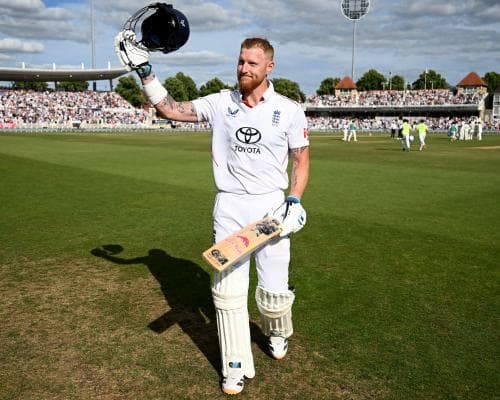
There is a particular breed of athlete whose value transcends statistics, whose presence on a field transforms the ordinary into the unforgettable. Ben Stokes is such a creature. When he walked out to bat on the fourth day against New Zealand, knowing it would be his last Test innings on home soil, the air at the ground carried a charge that no luxury box or champagne bar could replicate. This was not merely a game; it was the final movement of a symphony that began with a hundred in Australia, weathered the storm of a Lions exile, and crescendoed into the most thrilling period English cricket has known since the days of Botham.
To understand Stokes is to understand the intersection of raw power and refined instinct. His 7,000 runs and 250 wickets in Tests place him in a pantheon shared only with Jacques Kallis — a statistical rarity that whispers of a talent both brutal and elegant. Yet the numbers are merely the scaffolding. The true artefact is the way he played: a batsman who could dismantle an attack with the fury of a storm, then turn and bowl with the cunning of a craftsman. For those who collect not just objects but moments, Stokes’s career is a vault of such instants — each one a limited edition, never to be reissued.
The craftsmanship of his game lies in its unpredictability. Where others build innings brick by brick, Stokes seemed to sculpt them from chaos. His famous 135 not out at Headingley in 2019 was not a knock; it was a heist, a feat of nerve that required the patience of a watchmaker and the audacity of a gambler. The same duality defined his captaincy: a leadership style that could, as one observer noted, “cause as much chaos as I possibly can,” then pivot to a tactical decision as precise as a Patek Philippe chronograph. This is the kind of rarity that collectors of sporting heritage covet — a player who could, in the same breath, be both the storm and the eye of it.
In the market of elite athletic careers, Stokes’s retirement from Tests is akin to the closing of a rare-vintage cellar. His value to English cricket is incalculable, but the secondary market for his memorabilia — signed bats, match-worn shirts, the ball from that Headingley miracle — will only appreciate. Already, whispers of a lucrative IPL contract suggest that his next chapter will be no less opulent. Yet for the true connoisseur, the loss is not financial but experiential. Bazball, the exhilarating, maddening philosophy he embodied, may now fade into memory, a brief, brilliant flame that illuminated the sport before being extinguished by its own intensity.
What Stokes signals about luxury taste is a preference for the authentic over the polished, the visceral over the safe. In an age where wealth often seeks the predictable — the same watches, the same supercars, the same private islands — Stokes offered something rarer: a reminder that true greatness is messy, unpredictable, and impossible to manufacture. His legacy is not a trophy case but a feeling: the collective gasp of a crowd as he launched a six into the stands, the silence before a wicket, the roar that followed. For those who can afford the finest things in life, the finest thing may well be the memory of a man who played like he had nothing to lose, even when everything was on the line.
As the sun sets on Stokes’s Test career, the question lingers: what comes next for English cricket, and for the collector who cherishes such moments? The answer, perhaps, lies in the beauty of the finite. Like a limited-edition timepiece that will never be remade, Stokes’s career is now a closed chapter — one that will be studied, admired, and, for the fortunate few who witnessed it, owned in memory. The chaos he caused may be gone, but its echo will resonate for generations, a reminder that the most valuable things in life are not things at all, but the stories they leave behind.


