King Charles’s £24.6M Tax Disclosure: The Crown’s Opaque Balance Sheet Still Defies Investor-Grade Scrutiny
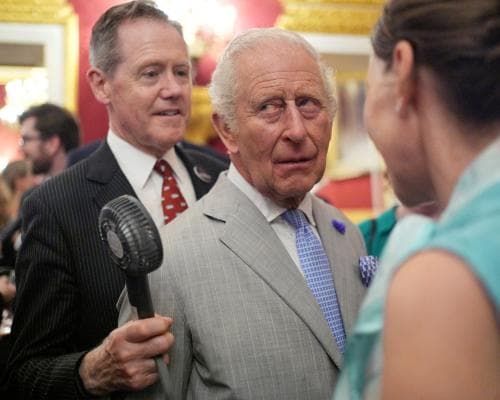
For the first time in modern British history, a reigning monarch has voluntarily published a tax bill. King Charles III revealed that he paid £24.6 million in income tax on his private earnings over the past two financial years. It sounds like a step toward sunlight. It is not. For anyone who builds, multiplies, or protects capital for a living, this disclosure is a masterclass in controlled opacity—a carefully staged concession designed to deflect deeper scrutiny of a wealth vehicle that has operated outside normal market accountability for centuries.
The headline figure is deliberately misleading. The palace announced the tax paid but refused to disclose the income, capital gains, or deductions that produced it. In any publicly traded company, that would be a red flag for auditors and investors alike. The £24.6 million figure is the equivalent of a corporate statement that says “we paid tax” without revealing revenue, margins, or effective tax rates. For the King’s private Duchy of Lancaster portfolio—estimated by historians to be worth well over £1 billion in cumulative returns over the past 70 years—that lack of granularity is a feature, not a bug.
The real story lies in the mechanics of how the Crown’s wealth is structured. The monarchy is funded through the Sovereign Grant, which is pegged to a percentage of the Crown Estate’s profits. This year, the grant gives the King 12% of those profits: £132 million, rising to £138 million next year. By 2027-28, that percentage jumps to 20.5%—a massive increase justified by the palace as compensation for fading offshore wind revenues. This is not a market-based allocation; it is a fixed royalty that adjusts only upward, regardless of economic conditions. For any family office or institutional investor, such a structure would be called a “heads I win, tails I win” arrangement.
The timing of the disclosure is no accident. It comes in the wake of the scandal involving Prince Andrew and the late convicted sex offender Jeffrey Epstein, which prompted MPs to break a long-standing self-imposed gag on discussing the constitutional monarchy. A parliamentary investigation into properties leased to the royal family at below-market rates is now underway. The King’s tax disclosure is a preemptive strike—a small, calculated surrender designed to preserve the larger fortress of secrecy around the Crown’s public and private wealth.
For the wealthy families and institutional allocators watching from the sidelines, this saga offers a clear lesson in wealth defense. The monarchy has mastered the art of voluntary disclosure as a shield: reveal just enough to silence critics, while keeping the balance sheet’s true leverage, assets, and liabilities hidden from parliamentary audit. The Duchy of Lancaster and the Duchy of Cornwall—the King’s two private estates—are treated as “private” income, yet they derive their value from land, mineral rights, and property that are effectively sovereign in nature. The taxpayer’s contribution is also weighted in the Crown’s favor, with the Sovereign Grant rising automatically even as the underlying Crown Estate profits fluctuate.
What does this signal for markets? It reinforces a principle that every private equity partner and hedge fund manager knows: transparency is a negotiation, not a given. The monarchy’s ability to maintain this wall of secrecy for centuries—even in the face of a parliamentary inquiry—suggests that the structural advantages of inherited wealth remain deeply embedded in the UK’s institutional framework. For wealth builders, the takeaway is that the rules of the game are not the same for everyone. The Crown’s balance sheet will remain opaque, its tax payments a token, and its capital structure immune to the kind of scrutiny that would be routine for any FTSE 100 company.
Looking forward, the real test will come in 2027, when the Sovereign Grant jumps to 20.5%. If the Crown Estate’s offshore wind profits decline as projected, the King will still collect a rising share of a shrinking pie—a transfer from the Treasury to the monarchy that will be hard to justify in an era of fiscal austerity. For investors and allocators, the King’s £24.6 million tax bill is not a transparency milestone. It is a reminder that the most durable fortunes are those that control the narrative, and that true accountability is never voluntary.


