FIFA's $25B World Cup Fire Sale: The Private Equity Deal That Broke Football's Bank
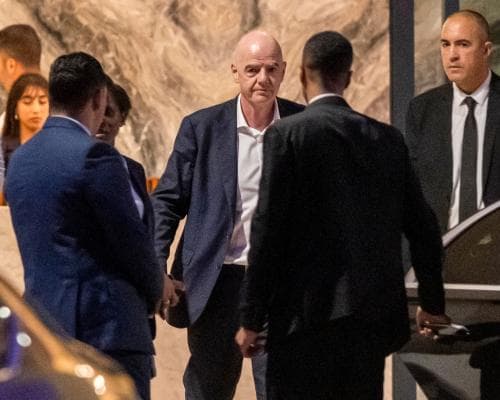
There's an old saying in finance: assets don't crash, balance sheets do. But sometimes, it's the men holding the balance sheet who crash first. Gianni Infantino, the president of FIFA, is learning that lesson in real time. The man who has run world football's governing body since 2016 is now fighting for his political life after a leaked proposal to sell a slice of the World Cup to private equity — with ties to Jared Kushner's brother — blew up in his face. This wasn't just a bad deal. It was a masterclass in how to torch institutional credibility in a single, catastrophic headline.
The scale of the proposed transaction was staggering, even by the standards of global mega-deals. Reports had circulated that FIFA was exploring the sale of a minority stake in its commercial arm — the entity that controls the World Cup broadcast rights, sponsorship deals, and marketing goldmine — to a consortium of investors that included a fund linked to Josh Kushner, brother of Donald Trump's son-in-law. The valuation talk? Somewhere in the region of $25 billion for the whole commercial enterprise. That's a number that would make sovereign wealth funds blink. For context, that's roughly the GDP of Latvia, or about three times what the NFL's media rights generate annually. The potential deal would have handed a handful of private equity insiders a permanent toll booth on the world's most-watched sporting event, with zero accountability to the 211 national federations that actually own the game.
Here's the mechanics of why this matters to anyone with serious capital. FIFA sits on billions in reserves — a war chest of roughly $4 billion built on the back of World Cup cycles that generate over $7 billion in revenue every four years. They don't need the cash. They need governance. The proposal was structured, according to leaked documents, as a way to 'monetise future revenue streams' — which is finance-speak for selling tomorrow's income today to pay for today's problems. The problem? Infantino's problems are political, not financial. He's been accused of running FIFA like a personal fiefdom, and this deal would have cemented that reputation by handing a permanent carry to politically connected financiers. The kicker is that Infantino himself could have personally enriched himself through the structure, a charge he has denied but which the optics alone have made radioactive.
The rarity of this moment can't be overstated. We're not talking about a struggling startup selling equity to survive. We're talking about the custodian of the world's most valuable sporting asset — a property so scarce that its 2026 edition is projected to draw over 5 billion viewers — almost selling its soul to a group of offshore funds. The backlash from within football's aristocracy has been brutal. Arsène Wenger, the legendary former Arsenal manager, called it a betrayal. Luís Figo, the Portuguese icon, demanded answers. Even FIFA's own council members have publicly turned on Infantino, which is like board directors of Goldman Sachs denouncing their CEO in the FT. And yet, Infantino is clinging on. He issued a half-hearted apology in Rabat, saying the project 'could have been handled differently' — which is a bit like a bank robber saying he should have worn a less conspicuous mask.
For the wealth desk crowd, this story is a textbook case study in governance risk. When an institution's leadership starts monetising core assets to private insiders, the value of that institution's long-term equity collapses — even if the short-term cash looks sweet. The signal here is that FIFA's commercial value, which has been a reliable compounder for sponsors and broadcasters, is now hostage to political instability. Institutional investors who were eyeing FIFA's media rights as a safe, recurring revenue play are suddenly recalibrating. The lesson from the Infantino playbook is simple: never let a single executive hold the keys to both the treasury and the throne. That's how bankruptcies happen — gradually, then suddenly.
Where does this leave the wealthy and the market? For now, the immediate deal is dead — aborted after the leak forced FIFA's hand. But the underlying pressure hasn't gone away. FIFA still needs to fund a bloated, expanding calendar and a $2 billion+ infrastructure push for the 2026 World Cup across North America. The private equity wolves are still circling, just more quietly. The likely outcome is a messy, protracted power struggle that will see Infantino either forced out or weakened to the point of irrelevance. Either way, the value of football's commercial rights just got a discount for political risk. For anyone with exposure to sports media assets, this is a warning shot. For anyone watching from the sidelines, it's a reminder that even the most beautifully constructed balance sheet can be shredded by a single bad actor with a pen. The game, as they say, is still the same. But the men running it just showed they're playing a different one.