The Unraveling of Certainty: When a Parkinson’s Diagnosis Vanishes and Identity Must Be Rebuilt
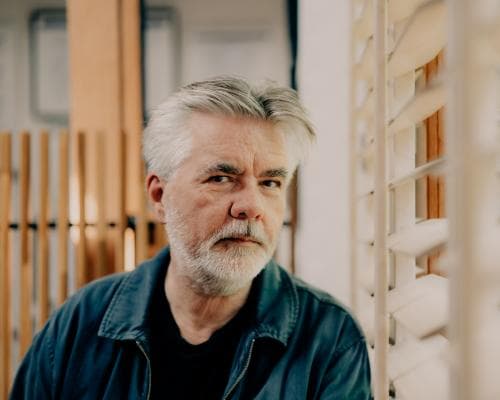
In the rarefied world of the ultra-wealthy, the ultimate luxury has never been a private jet or a bespoke timepiece. It is certainty—the unshakable confidence that one’s health, legacy, and identity are curated with the same precision as a multi-million-dollar portfolio. Yet for Mike Bell, a former show designer for Fortune 500 clients, the most devastating blow was not a diagnosis but its abrupt disappearance. After eight years of living under the shadow of Parkinson’s disease—a condition that had become his compass, his community, and his purpose—Bell was told by a new consultant that he did not have it. The moment he calls his “de-diagnosis” stripped him of more than a label; it erased the roadmap by which he had navigated his life. For those accustomed to purchasing expertise, this is a stark reminder that even the most expensive medical opinions can be provisional, and that true wealth lies in the ability to rewrite one’s own story.
Bell’s journey began at 53, when a freelance career designing corporate installations—live events, conferences, and immersive brand experiences—had him working seven-day weeks from a shed, a lonely digital nomad long before the term became fashionable. The diagnosis brought relief: a name, a plan, a protocol. He embraced it with the same meticulousness he once applied to his work, crafting a “Parkinson’s filter” of creative projects, writing a daily poem and a children’s novel, and plotting musicians’ careers in the style of a subway map. He joined the global Parkinson’s community, attended the World Parkinson Congress in Spain, and fundraised with sponsored walks and a parachute jump. The diagnosis gave him a tribe, a mission, and a reason to push through the dissolution of his marriage and the drying up of freelance contracts. Yet when new brain scans—taken in every possible position—revealed no trace of the disease, his entire edifice of meaning collapsed. The poetry stopped. The advocacy felt fraudulent. He became, in his own words, an impostor.
What makes Bell’s story a parable for the one-percent is the way it mirrors the precarious architecture of identity among those who build their lives on curated narratives. Bell’s father was a police officer, his mother a nurse; he grew up feeling like an “accident,” a sense of unworthiness that drove him to work punishing hours to prove his value. The Parkinson’s diagnosis, for all its terror, gave him a definitive answer to the question of why he suffered. Without it, he was left with only the symptoms—pains, tingling, tremors, skin problems—and a menu of vague alternatives like fibromyalgia or chronic fatigue syndrome. For the ultra-wealthy, who often treat health as the ultimate asset class, this is the nightmare scenario: a condition that cannot be named, priced, or managed with a bespoke treatment plan. The absence of a diagnosis is a failure of the system that money is supposed to conquer.
Yet within this void lies a lesson in the rarest of luxuries: the freedom to define oneself without a label. Bell’s response—to re-examine his life, to acknowledge that his workaholism was a quest for worth, to accept that his “Parkinson’s filter” was actually a survival mechanism—is a form of emotional arbitrage that no hedge fund can replicate. In a market where status is often signaled by the specificity of one’s medical team, Bell’s story suggests that the ultimate sign of taste is the ability to let go of a diagnosis that no longer serves you. His de-diagnosis is not a defeat but a reclamation of agency, a reminder that the most exclusive club is the one you create for yourself.
For the luxury market, this narrative signals a shift in how the ultra-wealthy will approach health and identity. The era of the passive patient—accepting a label and outsourcing hope to a physician—is giving way to a new paradigm: the self-curated life, where one’s condition is not a fixed point but a fluid narrative. Bell’s story is being read in private equity boardrooms and on the decks of superyachts, where the question is no longer “What do I have?” but “Who do I choose to be?” The next generation of luxury services will not just treat symptoms but offer the tools to rewrite one’s entire biography—a concierge for the soul.
As Bell continues to search for answers, his journey offers a forward-looking blueprint for those who can afford to interrogate every assumption. The future of wealth is not in accumulating more but in shedding the narratives that no longer fit. For the truly elite, the greatest investment is not in a cure but in the courage to live without one—and to build a new roadmap from the ashes of certainty.
The Experience
To explore your own narrative of health and identity, book a confidential consultation with our concierge medical network, where diagnoses are just the beginning of a bespoke journey.
Explore


