The Sublime Unlikeliness of a 62 at Royal Birkdale
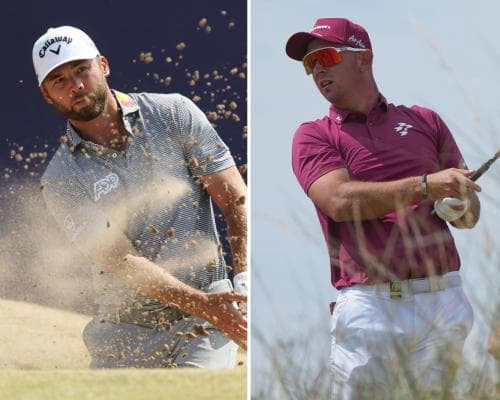
The best shots in golf don't always look like much. They don't roar off the clubface with the sound of a Ferrari V12; they hum, a low, clean thwack that seems to swallow the wind itself. That's what happened on day two of The 147th Open at Royal Birkdale, when Sam Burns — a man who will later confess, with disarming candour, that he is "not a huge fan of links golf" — walked off the 18th green having shot a 62. A 62. At an Open. On a course that has broken stronger men than him. It was the kind of round that makes the rest of us reconsider what we thought we knew about talent, grit, and the sheer bloody-mindedness required to bend a seaside links to your will.
Burns did not do it with brute force. He did it with a quiet, almost surgical precision that felt more like a jeweller setting a stone than a golfer swinging a club. The 62 — tied for the lowest round in Open history — was a masterclass in course management, a performance that would have made the late, great Peter Thomson nod in approval. For the connoisseur of rare athletic achievement, this was not merely a scorecard; it was a piece of ephemeral art, destined to be framed in memory long before the claret jug is hoisted. And yet, as Burns stood in the scorer's hut, he seemed almost apologetic, as if he had stumbled upon a secret he wasn't sure he was allowed to keep.
This is the paradox of links golf, and why it remains the ultimate test for the discerning player — and the ultimate spectacle for the discerning spectator. Royal Birkdale, with its towering dunes and capricious winds, does not reward aggression. It rewards patience, imagination, and a willingness to accept that sometimes the best you can do is a bogey. Burns' round was a study in that philosophy: a series of subtle, almost invisible decisions that added up to something historic. The course itself is a living piece of heritage, a sand-and-gorse cathedral that has hosted ten Opens, each one adding a layer of patina to its already storied soul. To shoot 62 here is to write your name in the same ledger as Arnold Palmer, Tom Watson, and Rory McIlroy — but with a humility that feels almost anachronistic.
For the collector of sporting moments — the same person who might own a first-edition copy of Bernard Darwin's "Golf Between Two Wars" or a set of hickory-shafted clubs — Burns' round is a reminder that rarity is not always about price. It is about context. A 62 at an Open is statistically rarer than a hole-in-one, rarer than a double eagle. It is the kind of thing that happens once a decade, if that. And it happened on a Friday afternoon, in front of a crowd that included a smattering of flat caps and waterproofs, while the rest of the world was distracted by the prospect of a World Cup final. The R&A, it must be said, seemed rather blasé about the scheduling clash, but for those who were there — who felt the salt spray on their faces and heard the thwack of Burns' fairway wood — it was a moment of pure, unmediated grace.
What does this tell us about luxury taste in 2026? That the most coveted experiences are no longer about exclusivity in the traditional sense — the velvet rope, the private jet, the members-only club. They are about authenticity. Burns' 62 was not manufactured for television; it was a byproduct of skill, luck, and a kind of stubborn indifference to the occasion. He didn't celebrate with a fist-pump or a roar. He simply walked off the green, signed his card, and admitted he doesn't really like links golf. That is the ultimate flex: to achieve something extraordinary and treat it as though it were merely a pleasant afternoon. The ultra-wealthy have long understood that true status is not about showing off; it is about the quiet confidence of knowing you have something that cannot be bought. Burns' 62 is that something — a fleeting, beautiful, and utterly unrepeatable moment that will be whispered about in clubhouses for decades.
As the weekend looms at Royal Birkdale, the leaderboard is a crowded canvas of talent — Scottie Scheffler lurking at four under, Tyrrell Hatton grinding out birdies with his characteristic blend of genius and fury, and a dozen others within striking distance. But the memory of Burns' 62 will linger, like the scent of salt and heather after the tide has gone out. For those of us who collect not things, but stories, it is a reminder that the best ones are often the most unlikely. And that sometimes, the most valuable asset in the game is not a driver or a putter, but a willingness to embrace the chaos — and smile through it.