The Three Musketeers: D’Artagnan — A €70 Million Masterstroke of Cinematic Craft and Aristocratic Adventure
In the rarefied circles where heritage meets hedonism, the pursuit of authenticity is the ultimate currency. For the ultra-wealthy, a bespoke timepiece or a hand-stitched saddle is not enough—they demand narratives that feel as lived-in as a château’s leather-bound library. Enter The Three Musketeers: D’Artagnan, a cinematic event that transforms a 179-year-old tale into a €70 million declaration of cultural sovereignty. This is not merely a film; it is a patrimonial investment in the kind of swashbuckling grandeur that private collectors and legacy builders crave. When the immortal cry “All for one, and one for all!” echoes across a screen so filthy with period grime you can almost smell the Seine, it signals a return to uncompromising craftsmanship in an age of algorithm-driven mediocrity.
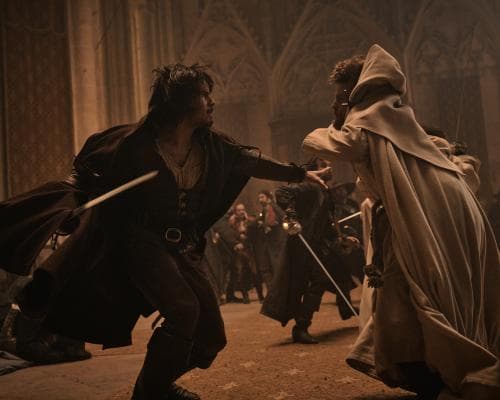
The numbers alone command attention. With a budget of €70 million—a sum that could fund a modest superyacht or a wing of a private museum—this two-part saga became France’s highest-grossing domestic release of 2023. Director Martin Bourboulon, a name whispered in the same breath as Audiard and Desplechin among connoisseurs of Gallic cinema, orchestrated a duology that debuted in April and December of the same year. The cast reads like a guest list at a Saint-Tropez estate sale: Vincent Cassel as the haunted Athos, Pio Marmaï as the hearty Porthos, Romain Duris as the enigmatic Aramis, and François Civil as the titular D’Artagnan—a young man whose lust for adventure is matched only by his talent for finding trouble. The plot, rooted in Alexandre Dumas’s original novel, weaves a web of political intrigue between Cardinal Richelieu (Éric Ruf) and Captain de Tréville (Marc Barbé), with King Louis XIII (Louis Garrel) caught in the middle. But the true star is the production’s tactile fidelity: mud-caked boots, rusted blades, and candlelit chambers that feel more like a private tour of Versailles than a soundstage.
Craftsmanship is the currency of the elite, and this film spends it lavishly. The kinetic swordplay is choreographed with the precision of a bespoke suit—each thrust and parry a study in balance and tradition. Long takes, rare in modern cinema, allow the viewer to inhabit the chaos of a duel, while the sets are so meticulously distressed that they evoke the patina of a centuries-old estate. The budget was allocated not to CGI spectacle but to tangible artistry: period-accurate costumes, hand-forged weaponry, and locations that span the French countryside. This is the kind of production that would make a Horology Society member nod in approval—every detail, from the sheen of a leather gauntlet to the weight of a silver goblet, is authentic. The sequel, Milady, released just eight months later, doubles down on this commitment, earning thunderous acclaim for its refusal to compromise on either scale or texture.
For the modern tastemaker, this film signals more than entertainment—it is a barometer of cultural capital. In a market flooded with franchise reboots and algorithmic content, The Three Musketeers: D’Artagnan stands as a defiant artifact of old-world luxury. Its success at the French box office—a market notoriously resistant to Hollywood hegemony—proves that discerning audiences still hunger for narratives that honor heritage without pandering. The film’s status as a duology, released in rapid succession, mirrors the cadence of a limited-edition collection: exclusive, intentional, and designed to be savored. It speaks to a clientele that values provenance over novelty, and whose private screenings often rival the red-carpet affairs of Cannes.
Looking ahead, this cinematic triumph sets a precedent for how luxury storytelling can evolve. As streaming services commoditize content, the ultra-wealthy will increasingly seek experiences that cannot be replicated—a film that demands a theater seat, a dinner at a chef’s table, a journey to a forgotten château. The Three Musketeers: D’Artagnan is not a product; it is a portal. For those who hold the keys to such a world, the next step is not simply to watch, but to inhabit. Whether through a private screening in a 17th-century manor or a curated trip to the film’s actual locations, the adventure is only beginning.
The Experience
Arrange a private screening at a historic French château with a curated dinner inspired by 17th-century court cuisine, followed by a fencing masterclass with a former Musketeer reenactor.