The Silent Fortune: How Passive Investing Became the Ultimate Power Move
In the rarefied air of seven- and eight-figure portfolios, the loudest moves are often the quietest. While the financial press celebrates the latest activist hedge fund coup or a billionaire's splashy private equity exit, a far more subtle—and staggeringly effective—strategy has been reshaping the fortunes of the ultra-wealthy for half a century. It is a strategy that requires no star fund manager, no boardroom coup, and no daily adrenaline. It is the art of buying the entire haystack, one index at a time. For those who understand that true wealth preservation is a marathon, not a sprint, the tracker fund has become the ultimate expression of disciplined, low-friction capital accumulation.
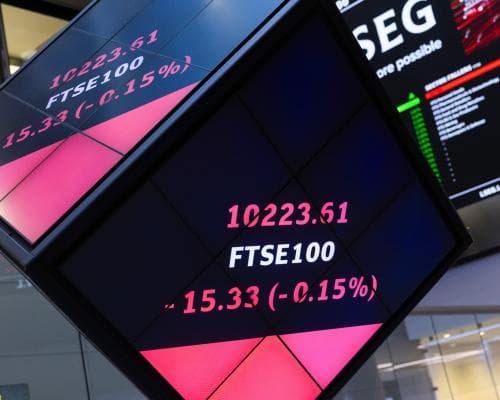
At its core, the tracker fund—or passive fund—is a deceptively simple instrument. Instead of paying a team of analysts to pick individual winners, it mirrors the performance of a market index, such as the S&P 500 or the FTSE 100. The numbers speak with the cold authority of compound interest: according to recent data from AJ Bell's Manager versus Machine report, only 29% of active fund managers outperformed their passive counterparts in 2025. Over the past decade, that figure drops to a humbling 24%. For the investor who values certainty over bravado, the math is undeniable. The secret lies in diversification—spreading capital across hundreds or thousands of companies so that the growth of winners naturally offsets the stumbles of laggards. As Vanguard's legendary founder Jack Bogle once distilled it: 'Don't look for the needle in the haystack. Just buy the haystack.'
This is not a product for the novice alone; it is the quiet engine behind many of the world's largest family offices and endowment funds. Tracker funds can be structured as open-ended investment companies (Oeics) or the more modern exchange-traded funds (ETFs), both of which offer liquidity and transparency that active funds often lack. The cost advantage is equally compelling: with no management team to compensate, fees are a fraction of those charged by active managers. For a portfolio of $50 million or more, that fee differential can mean millions of dollars saved over a decade—capital that remains deployed, compounding silently. This is not about avoiding risk; it is about optimizing return on every dollar of overhead.
What does it signal about wealth in the twenty-first century? That the most sophisticated capital is no longer chasing hot stock tips or quarterly heroics. The tracker fund embodies a philosophy of patience and humility—a recognition that no single manager can consistently outsmart the collective wisdom of the market. For the ultra-wealthy, this is not a compromise; it is a statement of financial maturity. It says, 'I understand that the market's long-term trajectory is my ally, and I will not pay a premium for the illusion of control.' In a world where status is often measured by access to exclusive hedge funds, the quiet discipline of passive investing is the new badge of financial intelligence.
Looking forward, the trajectory is clear. As index funds continue to absorb an ever-larger share of global assets, the line between active and passive will blur further. The ultra-wealthy will increasingly use trackers as the core of their portfolios, layering on selective alternative investments for alpha. The message is unmistakable: the greatest fortune is not made by outsmarting the market, but by owning it—patiently, efficiently, and without ego. For those who can afford to think in decades, the haystack is the only needle you will ever need.
The Experience
To implement a bespoke passive allocation for your portfolio, schedule a confidential consultation with our wealth advisory team, who can structure a tax-efficient tracker portfolio tailored to your family office's objectives.


