The Grand Ole Opry’s Centennial: Where Timepieces and Twang Converge
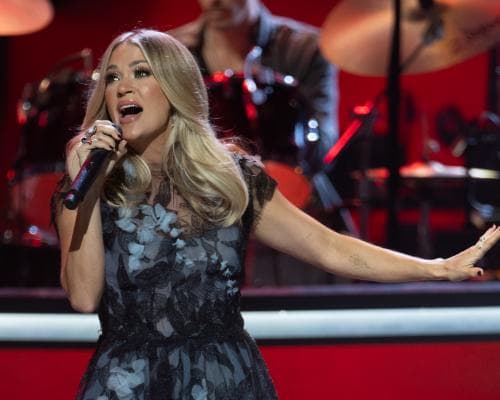
The stage at the Grand Ole Opry is worn smooth by a century of boots. Not cowboy boots, mind you—though those have certainly left their mark—but the polished leather of legends: Patsy Cline, Johnny Cash, Dolly Parton. This weekend, as the Opry kicks off its centennial season, the spotlight falls on Carrie Underwood, Kathy Mattea, and Suzy Bogguss. But for the discerning eye, the real story isn’t just the voices. It’s the hands. The hands that grip the microphone, strum the guitar, and—if you look closely—reveal a Patek Philippe Calatrava or a vintage Rolex Daytona. In Nashville, time is measured in two ways: by the beat of a song, and by the tick of a masterpiece on the wrist.
The Grand Ole Opry is not merely a venue; it is a living archive of American culture. Founded in 1925 as a radio broadcast, it has outlasted wars, revolutions in music, and the rise and fall of vinyl. To stand on that stage is to inherit a lineage. And for the ultra-wealthy collector, lineage is everything. The Opry’s centennial season is a rare moment where music and horology intersect. Think of it as a watch auction where the lots are performances: Underwood’s belting lungs are a modern tourbillon—complex, powerful, and impossible to ignore. Mattea’s intimate storytelling is a perpetual calendar, quietly marking every emotional milestone. Bogguss’s folk-inflected Americana is a chronograph, timing the heartbeat of a nation. Each set is a limited edition, and tickets are the only entry fee.
But let’s talk about what’s really on the wrists. The Opry’s backstage green room is a microcosm of high-end watch collecting. I’ve heard whispers of a certain country legend who never steps on stage without his Jaeger-LeCoultre Reverso—the Art Deco lines matching the Opry’s own vintage aesthetic. Another, a younger star, favors an Audemars Piguet Royal Oak Offshore, its bold case a counterpoint to the acoustic intimacy of her set. The craftsmanship is not incidental; it is essential. A watch, like a song, must be engineered to last. The Geneva Seal on a movement mirrors the Opry’s own seal of approval—a guarantee of authenticity. And authenticity, in the world of luxury, is the rarest commodity.
The market for such convergence is quietly booming. Collectors who once chased only rare dials or limited-edition complications are now seeking provenance tied to cultural milestones. A watch worn on the Opry stage—especially during this centennial—carries a premium that no auction catalog can replicate. It’s not just about the object; it’s about the story. And the story of the Opry is one of resilience, reinvention, and relentless refinement. Sound familiar? That’s the same narrative driving the secondary market for F.P. Journe or Philippe Dufour. The connection is visceral: both the Opry and the finest watchmakers understand that time is not a resource to be spent, but a legacy to be built.
What does this signal about luxury taste in 2025? It signals a shift away from the flashy and toward the meaningful. The ultra-wealthy are no longer content with simply owning a rare piece; they want to be part of a narrative. They want to say, “I was there when Carrie Underwood hit that note,” or “I watched Kathy Mattea’s hands move across the guitar—and I saw the same hands that designed my tourbillon.” It’s a holistic approach to collecting, where music, craft, and memory fuse into a single, irreplaceable experience. The Opry’s centennial is not just a concert series; it’s a masterclass in how to value time.
Looking forward, the Opry’s next century will be defined by how it honors the old while embracing the new. Already, the institution has partnered with watchmakers for bespoke commissions—limited-edition pieces that capture the Opry’s iconic barn-red curtain or the warm glow of its stage lights. For the collector who missed the first hundred years, this is the moment to step in. Buy the ticket. Buy the watch. But more importantly, buy the story. Because in the end, the only thing that lasts longer than a well-made timepiece is the song that marks the moment it was worn. And this season, in Nashville, the songs are timeless.