The $87.6B Iran War Tab: How Trump’s Escalation Is Reshaping Defense Budgets and Supply Chains
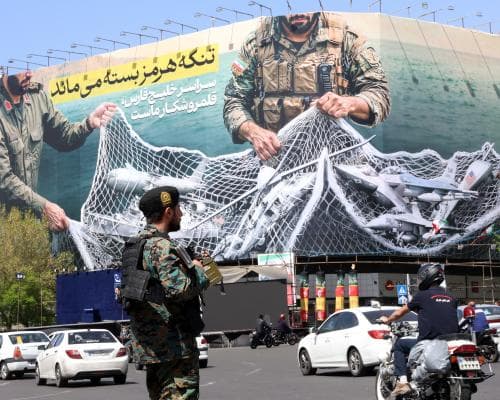
For investors who parse the federal budget as a map of where capital will be forcibly redirected, the Trump administration’s latest supplemental funding request is a seismic signal. The White House is asking Congress for $87.6 billion in fresh appropriations, with the lion’s share—$67.1 billion—earmarked for the ongoing military campaign against Iran. This is not a routine budget drill. It is a direct bet that the United States can sustain a high-cost, low-permission conflict without triggering a sovereign credit event or a bond market revolt. The request lands on Capitol Hill at a moment when legislative machinery has all but seized up: the president is blocking a bipartisan housing bill, demanding a sweeping voting rights measure, and tying it all to the renewal of a foreign surveillance law. The result is a funding logjam that threatens to delay or dilute the very spending that defense contractors and commodity traders are already pricing in.
The scale of the ask is staggering even by wartime standards. Of the $67.1 billion for the Iran conflict, $21 billion is allocated specifically for munitions procurement and the defense industrial base. That means companies like Lockheed Martin, RTX, and General Dynamics will see a direct pipeline of orders for precision-guided munitions, missiles, and sustainment services. The Pentagon’s proposed $1.5 trillion budget—already the largest in decades—now sits atop this supplemental, compounding the upward pressure on defense equity valuations. But the capital story is not confined to defense primes. The request also includes $11.1 billion for U.S. farmers, who are reeling from the administration’s tariff regime and from input cost inflation driven by the Iran conflict—fertilizer and diesel prices have spiked as supply routes tighten. The White House is also pushing for year-round E15 gasoline sales, a move that would benefit ethanol producers like Archer-Daniels-Midland and Poet but could exacerbate air quality concerns and create regulatory friction in energy markets.
The mechanics of this request reveal a deeper structural tension. The $87.6 billion is not authorized by any formal declaration of war; it is a supplemental appropriation that bypasses the normal budget cycle, effectively asking Congress to write a blank check for an executive-driven conflict. The political calculus is precarious: top Democrats have already signaled they will not fund an unpopular war that lawmakers never authorized. This sets up a classic Washington standoff that could delay the flow of funds, creating volatility in defense and agricultural equities. For bond investors, the added fiscal burden—on top of a $1.5 trillion Pentagon baseline—raises questions about the trajectory of the national debt and the willingness of foreign buyers to absorb U.S. Treasuries at current yields. The 10-year note, already under pressure from inflation expectations, could see further upward drift if this funding is passed without offsetting revenue or spending cuts.
What this signals for the wealthy is a regime shift in how capital is being mobilized. The administration is effectively using the Iran conflict as a fiscal lever to consolidate executive power over spending, bypassing the normal appropriations process. For family offices and institutional allocators, the playbook should include overweighting defense contractors with direct exposure to munitions and logistics, while hedging agricultural commodity exposure against tariff-induced disruption. The $1.4 billion allocated for Ebola response in the DRC is a reminder that geopolitical risk is not linear—pandemic preparedness spending also flows to pharmaceutical logistics and cold-chain infrastructure. Meanwhile, the housing bill standoff suggests that real estate markets, particularly residential construction, may face a policy headwind that could slow the pace of new supply just as mortgage rates remain elevated.
Looking forward, the key variable is whether Congress resolves its logjam before the end of the fiscal quarter. If the supplemental passes, expect a near-term rally in defense stocks and a modest tailwind for ethanol producers, but watch for a sell-off in Treasuries as supply concerns mount. If it stalls, the uncertainty will weigh on contractor backlogs and farmer sentiment, potentially dragging on Q4 GDP. Either way, the $87.6 billion figure is a floor, not a ceiling. As the conflict with Iran deepens—and as the administration continues to link foreign policy to domestic legislative battles—the cost of capital for defense and energy sectors will increasingly reflect geopolitical risk premiums. For those managing multi-asset portfolios, the message is clear: the era of cheap fiscal policy is over, and the price of geopolitical leverage is now being written into the federal ledger.


